We spent a full day here on our Normandy road trip, and in this video we’re sharing exactly how we did it. From the best cliff walk for all the views, where and what to eat (without falling into tourist traps), a bit of the history, and the nearby towns you really shouldn’t skip. If you want to do Étretat properly, this is everything you need to know.
Where is Etretat?
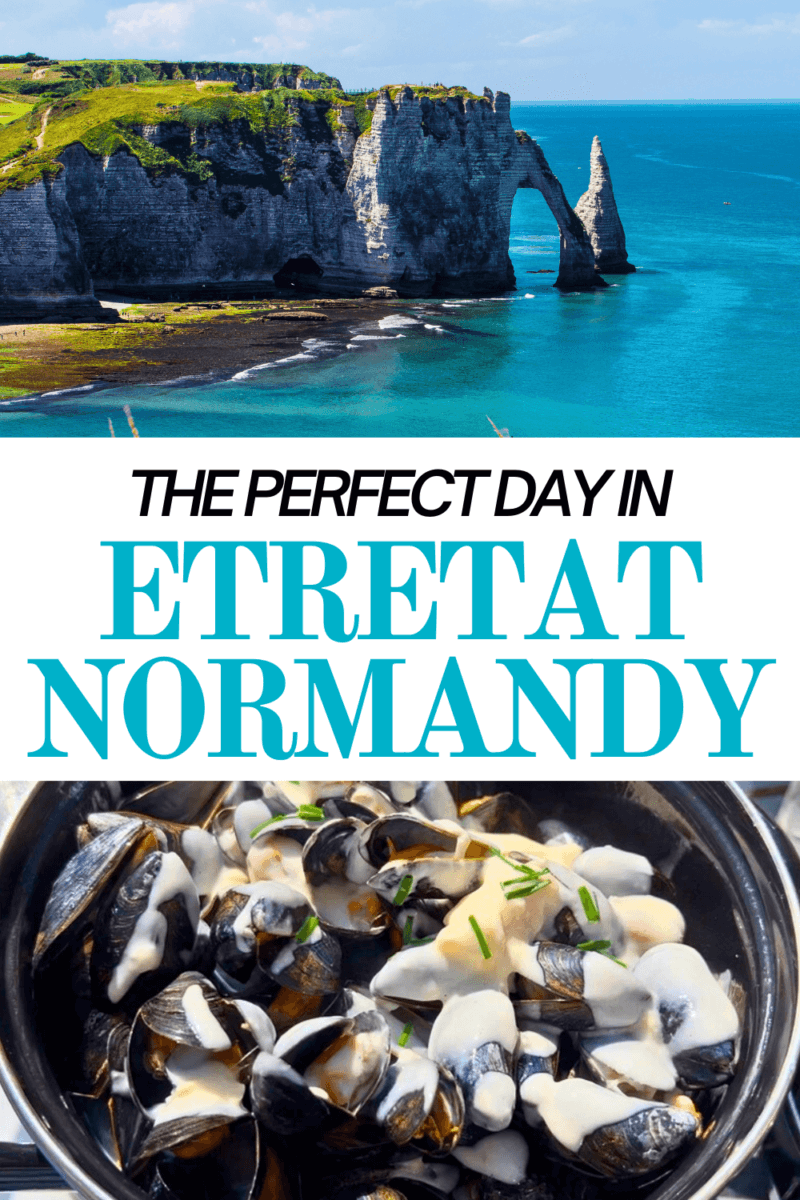
Étretat is a stunning town on the coast of the region of Normandy in Northern France.
It became famous in the 19th century when artists started coming here to paint the dramatic cliffs, especially Claude Monet, who painted the cliffs over and over in different light and weather.
That’s a big reason the town became a popular seaside destination in the first place. It was also a desired holiday spot during the Belle Époque, attracting Parisian high society who built elegant villas above the cliffs.
Étretat was involved in World War II because German forces occupied the town as part of the Atlantic Wall defenses, but it didn’t play a major role in the D-Day landings.
How to Visit the Cliffs at Etretat
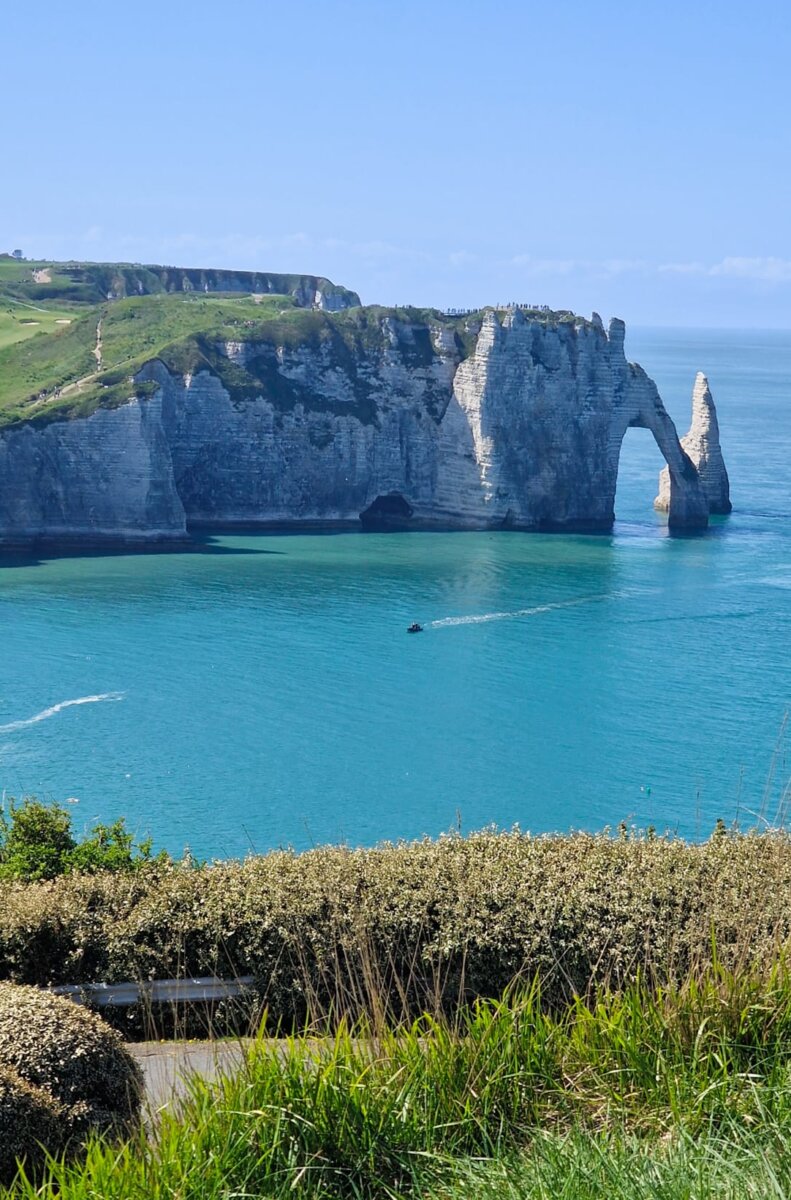
What makes Étretat special are, like we’ve mentioned, its dramatic cliffs and rock formations called «Falaise», the Port d’Aval arch and L’Aiguille (which means needle, that’s the sharp «needle-shaped» one rising out of the sea). The cliffs are primarily made of white chalk, a soft, porous limestone made up of microscopic marine fossils.
For the best views, start at the top of the cliffs at Falaise d’Amont near Chapelle Notre-Dame-de-la-Garde, then walk down to the main beach, Étretat’s main beach, Plage d’Étretat. It’s a stunning pebble beach and the water is super clear.
Just remember you can’t take stones from Plage d’Étretat because the pebbles are protected and play an important role in preventing coastal erosion and protecting the cliffs. From there, walk up the Falaise d’Aval, or do the route in reverse. It’s about a 30 min walk in total without counting the stops.
We visited Étretat in April and it was a perfect day. The sky was clear, which we really recommend, because the experience wouldn’t be the same on a cloudy day. You want that bright turquoise water and the green cliffs. There were people around, enough for there to be an amazing vibe, but it didn’t feel too crowded.
Visit the Jardins d’Étretat
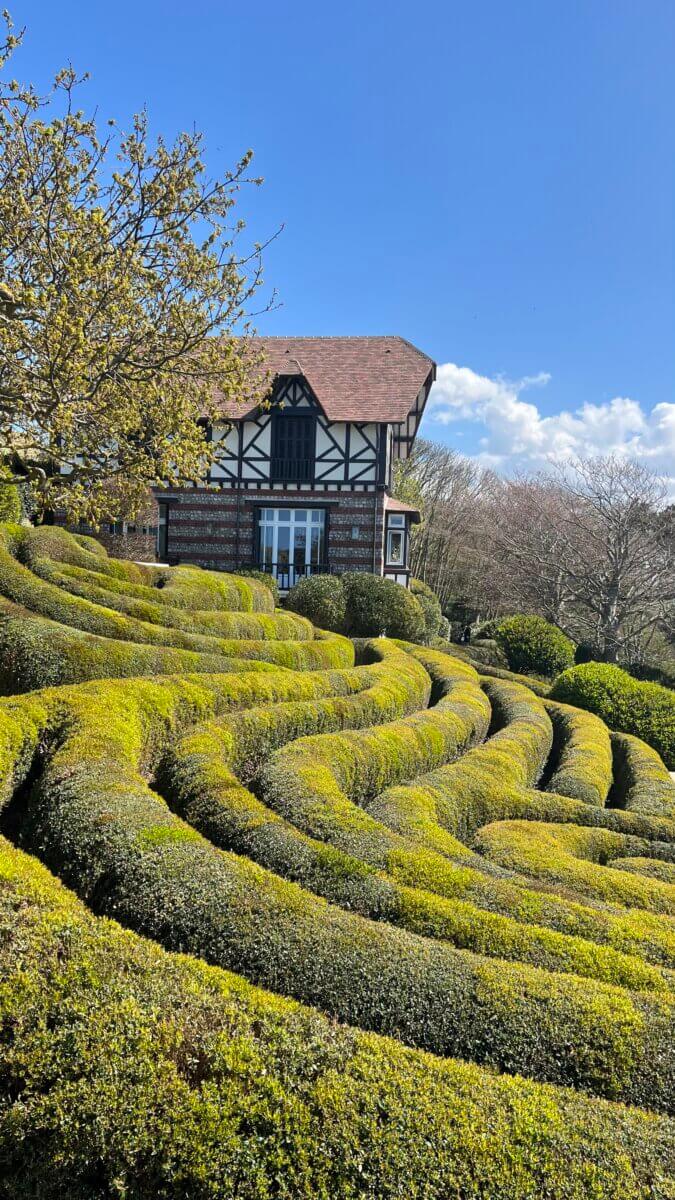
While at the Falaise d’Amont, Les Jardins d’Etretat garden is really lovely and worth checking out.
However, we did think the price was a bit steep (€12.90) for what it was, just keep that in mind. Still, we’re glad we went!
It’s supposed to be inspired by Monet’s paintings and I can definitely see that in some areas. The main thing most people go there for is to see the giant head-shaped sculptures, each with a unique expression, surrounded by bushes that look like flower petals. This garden is inspired by Marie-Antoinette’s first oyster farm in France, which was located in the English Channel. The trimmed plants are meant to look like the underwater world where oysters live. And the sculptures with “emotion faces” add a lot of personality to the garden. I found them quite interesting and fun to look at.
Overall it’s a beautiful, well looked after garden with plenty to explore with a gift shop in a beautiful house with views of the cliffs and a cute little café at the bottom. Our favourite part was the view from the lookout, where you can see the arch and the needle. The maze-like spiral bushes with the Belle Epoque house « La Roxelane » in the background which is the gift shop, there is an amazing view from inside as well. And the zen garden filled with white rhododendrons and clay sculptures hanging from the trees.
If you want something to drink, there is also an adorable old red food truck where they sell coffee and pastries.
Where and What to Eat in Etretat
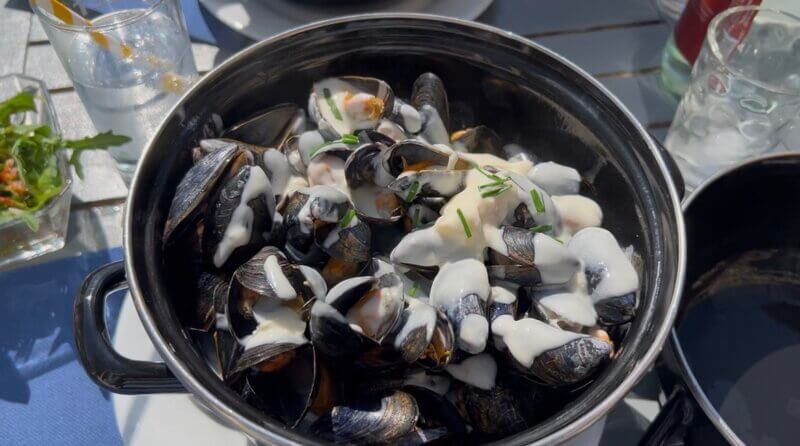
Speaking of food, for lunch we had the most amazing moules frites (mussels and fries that are typical in Normandy served in many different ways).
The ones we ordered were covered in Camembert cheese at a spot called La Courtine, since Camembert is local to Normandy. The service was great, and their mussels are imported from different parts of France, so they serve them year-round. We sat outside since it was such a beautiful day and although we didn’t have views of the cliffs, the surrounding buildings were lovely.
A big tip when eating meals in touristy places is to walk a couple mins away from the main areas. This is the sacrifice you have to make if you want much better quality food for better prices. The restaurants right on the beach, while they have amazing views, are overpriced and generally speaking don’t sell fresh products.
If you have a sweet tooth…
Although seafood is a must in this region of France, if you want something different, sweet crepes and savoury crepes (called galettes) are also very popular here. They originally come from Brittany, but the two regions are next door to each other, so you’ll find them everywhere.
For dessert, there are many small artisan food shops and bakeries in town. We tried a few pastries at Maison Piquenot and really recommend their croissants and lemon tartlets.
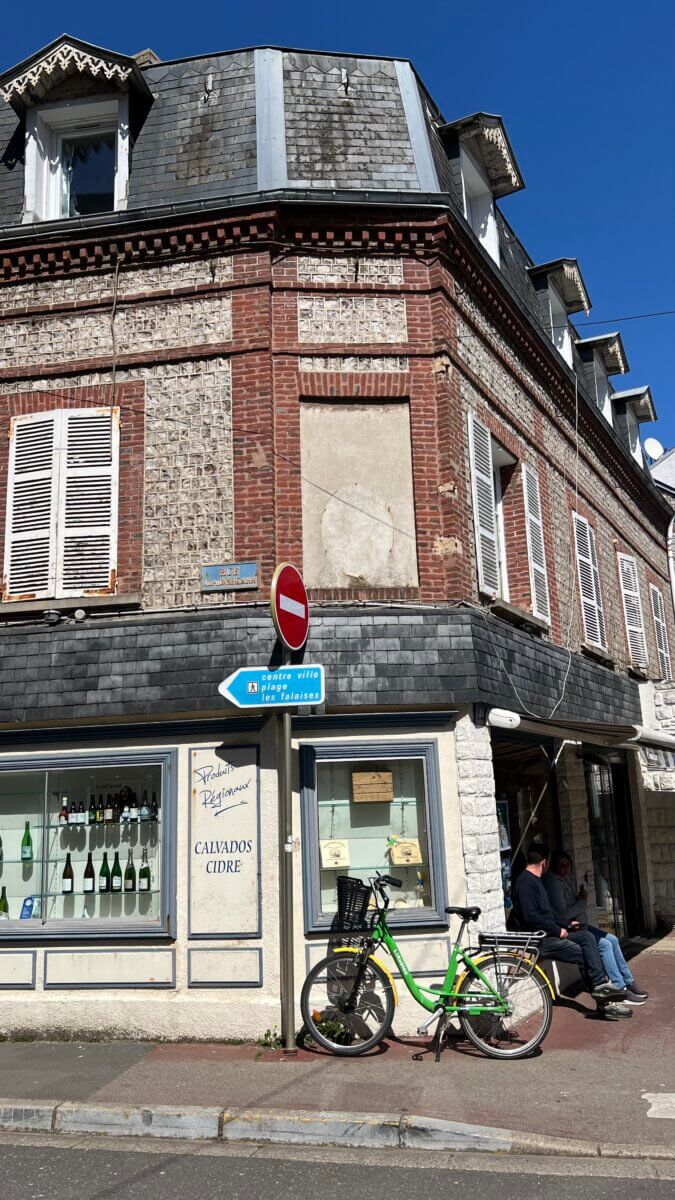
When visiting delicatessens, like Biscuiterie Jacques Delaunay, look out for local specialties like cider, Calvados, and pommeau, and consider taking a bottle home as a souvenir. Normandy grows a lot of different types of apples. That’s why they’re known for apple cider and Calvados. Which is basically apple brandy made by distilling cider. Pommeau is an 18% aperitif, made by mixing Calvados and fresh apple juice and aging it in oak barrels, that’s usually served before a meal.
Must-Visit Towns and Villages Nearby
If you’re traveling around this part of Normandy, there are a few towns worth adding to your list.
Honfleur
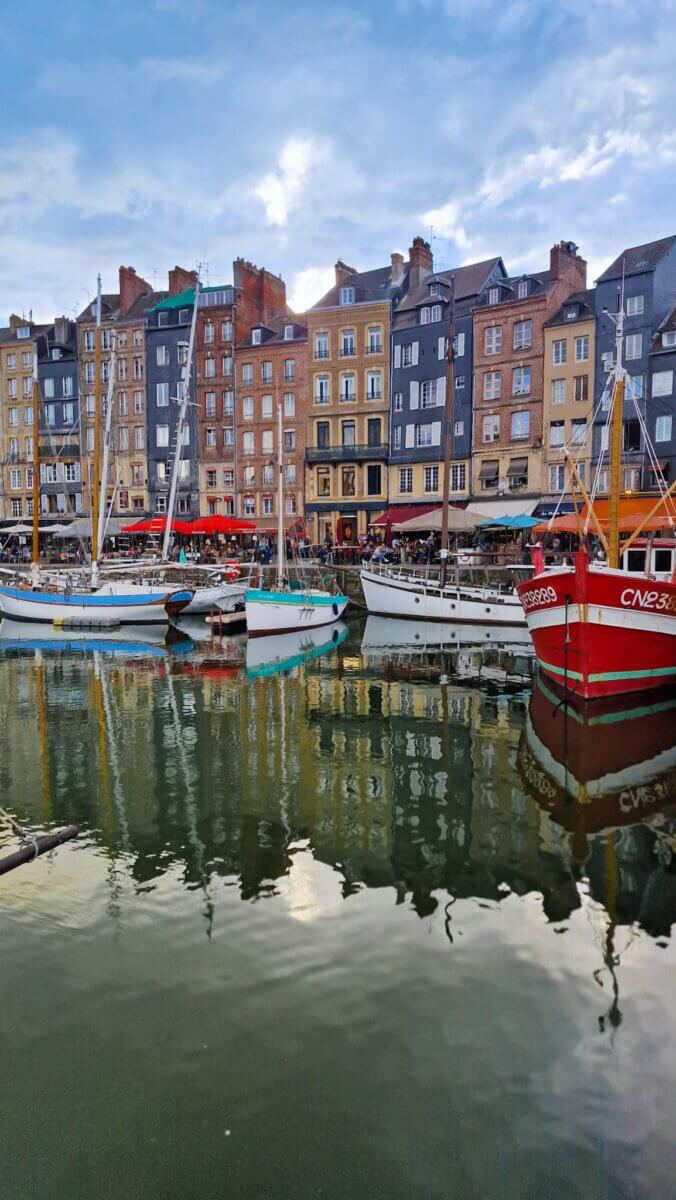
Honfleur is the first one. It’s about 40 minutes by car from Étretat. The port blew us away with all the boats surrounded by colorful buildings and restaurants. While you’re there, don’t miss the galettes (savoury buckwheat crêpes) at a cute spot called J’en crêpe d’envie. We tried one with typical toppings from Normandy: apple, Vire sausage, and creamy camembert. So good!
Le Havre
Next is Le Havre. When driving from Honfleur to Étretat, you’ll most likely cross the Pont de Normandie. This long bridge is significant because it’s the last bridge over the Seine River, located right at the river’s mouth. It connects Honfleur to Le Havre, the major port city at the mouth of the Seine, which is said to be the first city in Normandy.
Honourable mentions are Villerville, Deauville, and Trouville-sur-Mer, which are all full of half-timbered Belle Époque villas. Deauville is an upscale holiday destination known for its golf courses, horse races, and the American Film Festival.
Sing up for our weekly newsletter and get a FREE Packing List Template!
Best Places to Stay in (or around) Etretat
Budget friendly stays…
Medium budget stays…
Luxury stays…
- Dormy House – Luxury hotel offering panoramic views of the cliffs, right by the beach.
- Normandy Etretat – cozy, comfortable apartment with excellent amenities and only 10 min walk from the beach
Related Reads You’ll Love…
If you’re looking for more ideas on where to go in France, make sure to check out our blog post “8 Top French Holiday Destinations” for some seriously beautiful spots. And if the south of France is on your list, don’t miss our full FrenchRiviera RoadTrip — it’s packed with dreamy stops and practical tips. Traveling on a budget? We’ve got you covered. Head over to our Top Budget TravelHacks to learn how to plan the trip of your dreams without spending a fortune.
Leave a Reply