We recently went back to Brittany, but this time we explored the west side of the region, in Finistère, and honestly, we were blown away. So of course, we had to show you everything we did, from the places we visited and what we ate, to the tips we wish we knew before going. And by the end, you might just want to add Finistère to your France travel list.
Before we get into Finistère, our trip started in Madrid, so we actually road-tripped here from Spain. When we do longer road trips like this, we usually spend a night in Bordeaux to break up the drive, which is pretty much halfway, and we absolutely love it there.
Now, on to the itinerary…
Finistère, Brittany France
ÎLE DE RÉ
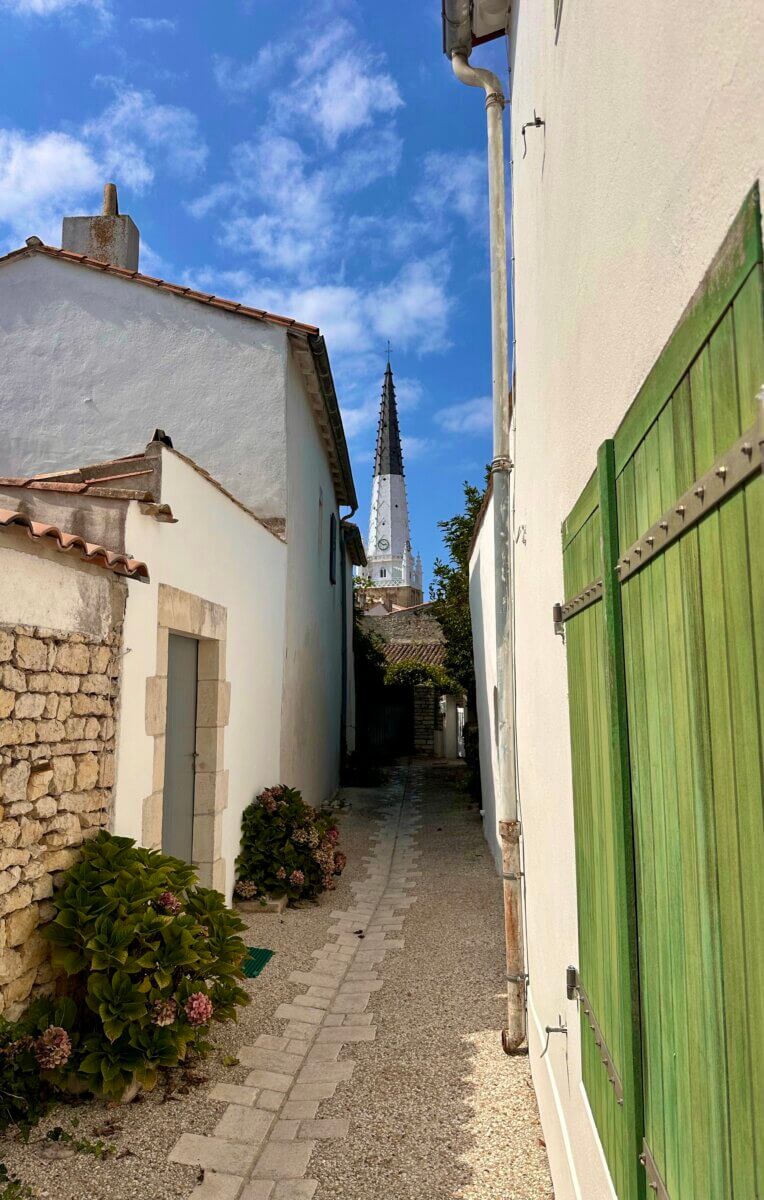
Not technically in Finistère yet, we decided to visit Île de Ré. We drove from Bordeaux to La Rochelle where the bridge to the island is, Pont de Ré bridge. The toll is €16 per car during the high season and half that during the rest of the year.
The bridge is almost 3 kilometres long and crosses the Pertuis Breton strait, making it one of the longest bridges in France.
We’d heard Île de Ré described as the Hamptons of France, and it had been on our travel bucket list for years. So we were really excited to finally visit.
We only had one day there and visited places like Sainte-Marie-de-Ré and La Flotte. But we’d definitely love to come back for a full week one day and do a full post on it. So stay tuned for that.
We’d love to spend more time cycling around the island and exploring all the little towns.
We’d also love to relax at beachside restaurants and cabanes ostréicoles, which are the island’s oyster huts. And just enjoy the vibe.
Before we left we stopped at a popular bakery in France called Feuillette. We definitely vouch for this boulangerie! The almond croissant was delicious, and this thick chocolate cookie was incredible! We got great, friendly service too.
CONCARNEAU (KONK-KERNE)
Concarneau is where we based ourselves for the trip. This worked really well for us because we could stay in one place and take day trips to different parts of Finistère instead of constantly changing hotels.
We absolutely loved our time in Concarneau. The weather in summer was perfect when we visited. sunny but not too hot, with a gentle breeze at times, and we actually ended up staying an extra two days because we loved it so much. We honestly don’t think we’d ever get bored living here. There’s just so much to do, and I really loved the slower pace of life and the coastal vibe.
One of the highlights here is the Ville Close, or Walled City. The Walled City is a medieval town surrounded by stone walls, built in the 15th and 16th century, filled with typical Breton houses, cafés and restaurants. It sits right on the water with tons of fisherman boats around it.
Our favourite thing we did here was have picnic lunches, sitting on a bench, looking over the water and the boats close to Plage Tinou, across from Concarneau. We would grab food from a supermarket we absolutely love called Fresh. We talk about it in detail, and how it’s the perfect option when travelling on a budget, at the end.
Just keep in mind, whether it’s high tide or low tide affects the view significantly. We prefer it during high tide when it’s full of water. So make sure to plan ahead and check the times.
What to eat in Concarneau
And talking about food, you can’t leave Brittany without trying a Kouign-Amann. We tried it for the first time in Saint Malo and absolutely loved it. A kouign-amann is a traditional Breton pastry made with layers of buttery dough, sugar, and butter, baked until crispy and caramelised on the outside but soft on the inside. We are obsessed with it! We bought a big one from Maison Georges Larnicol that we shared for a couple of days during the trip, and it was the best one we’ve ever tasted. It was so tempting to eat the whole thing in one sitting!
On our first night, for dinner, we went to a restaurant called Le Chantier, right on the harbour, known for their seafood and oysters. You can sit upstairs or on the outside terrace downstairs and either way the view is amazing. We loved this restaurant. The food was delicious and the service was good.
Inside the Walled City there are also many many restaurants, however, although a lot of them looked really nice, we were sceptical because it seemed very touristy to us. We can’t give our opinion on any restaurant in particular, so it wouldn’t be fair to say there aren’t any good ones, but in our experience restaurants in tourist areas are likely to be tourist traps. It’s always best to walk or drive a few minutes away and you’ll find hidden gems with stunning views.
QUIMPER (KEMPER)
Quimper is the main capital city of Finistère and only a 30 min drive from Concarneau. You’ll notice that on this side of Brittany, where there’s more Celtic influence, the signs with the place names often also have their Breton equivalent. In this case, it’s Kemper. And Kreiz-Ker is Breton for “city centre”.
Quimper sits where the Steir and Odet rivers meet, and the town dates all the way back to Roman times. It is also the ancient capital of Cornouaille. Cornouaille or Pays de Cornouaille is like Perigord is to Dordogne or Pays d’Auge is to Normandy. Brittany is the official administrative region, while Cornouaille is a historic and cultural area within.
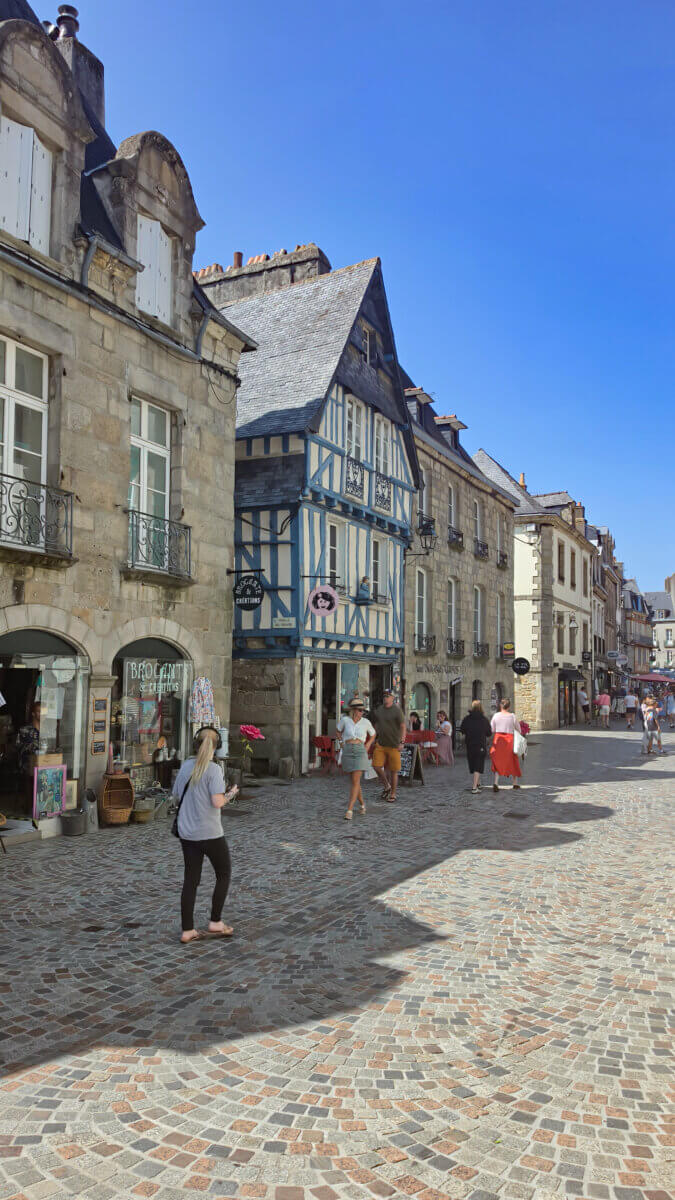
The historic centre is definitely the main reason to visit. It’s incredibly well preserved, with cobblestone streets, old stone buildings, and rows of colourful, centuries-old timber-framed houses.
In fact, Quimper is considered the oldest town in Brittany, with more than 2,000 years of Gallo-Roman history, and its historic centre escaped damage during WWII. Brest, another major port city in Finistère, unfortunately was almost completely destroyed during the 1944 siege, so it’s significantly more modern.
One of the things we loved in Quimper is that some of the streets are still named after the medieval trade guilds that used to work there. Rue Kéréon, for example, was the street of the shoemakers.
Things to see and do in Quimper
If you want an easy way to see the historic centre without walking all those steep cobblestone streets, take the Tourist Train. We did the 40-minute guided ride, which cost just €5, and it was a really easy way to get an overview of the city while learning about its history.
Then head inside Saint-Corentin Cathedral. This huge Gothic cathedral dates back to the 13th century, and there’s a really unusual detail inside: the main central aisle bends slightly to the left because the cathedral had to be built around older foundations. And make sure you look up at the 15th-century stained glass windows because they’re beautiful.
And if you’re walking along Rue Kéréon, stop at Les Macarons de Philomène. It’s a famous pastry and macaron shop inside a historic 14th-century timber-framed building. You’ll recognise it from the hand-painted sign and the statue of a woman wearing traditional local clothing outside.
Finally, take a walk along the Odet River. It runs right through the centre of town and is lined with old stone walls and little footbridges covered in flowers. It’s a much quieter way to experience Quimper after walking around the busier shopping streets.
And honestly, this is one of the things I loved about Brittany in general. The region feels quite different from the rest of France, with its strong Celtic influence, wild coastline and old towns that have kept so much of their character.
Next, we came across the little coastal village of Sainte-Marine in Combrit almost by accident.
SAINTE-MARINE & BÉNODET (SAINT-VORAN & BENODET)
We were looking for a restaurant right on the water with a nice view, and that’s how we found Café de la Cale.
Sainte-Marine used to be a quiet fishing village, and today it’s still a really charming waterfront spot with a relaxed coastal vibe.
We ordered the Planche Breton to share. A planche bretonne is a traditional Breton sharing board, almost like a charcuterie board, usually filled with local cheeses, cured meats, pâtés, bread, Breton butter and other regional specialties. It was delicious! For dessert we ordered the sweet version of this called a Planche sucrée (sweet board). Ours had kouign-amann, canelés, and other local desserts. It’s a great way to try different things at once. Think of it like a Breton café gourmand.
After lunch, we highly recommend walking down to the little port called Port Sainte-Marine. There are many other adorable restaurants, like an adorable crêperie, little boats on the water and beautiful stone houses. This was one of our favourite spots we visited.
While we were having lunch, we noticed a little shuttle boat called Le P’tit Bac, which takes pedestrians and cyclists between Sainte-Marine and Bénodet. It only costs 2€ for adults, 1€ for children, babies are free, and it’s 2€ per bike. It departs every 30 mins from both Sainte-Marine and Bénodet.
So if you’re visiting without a car, this would be a really fun and scenic way to cross the Odet River and explore both sides.
In Bénodet
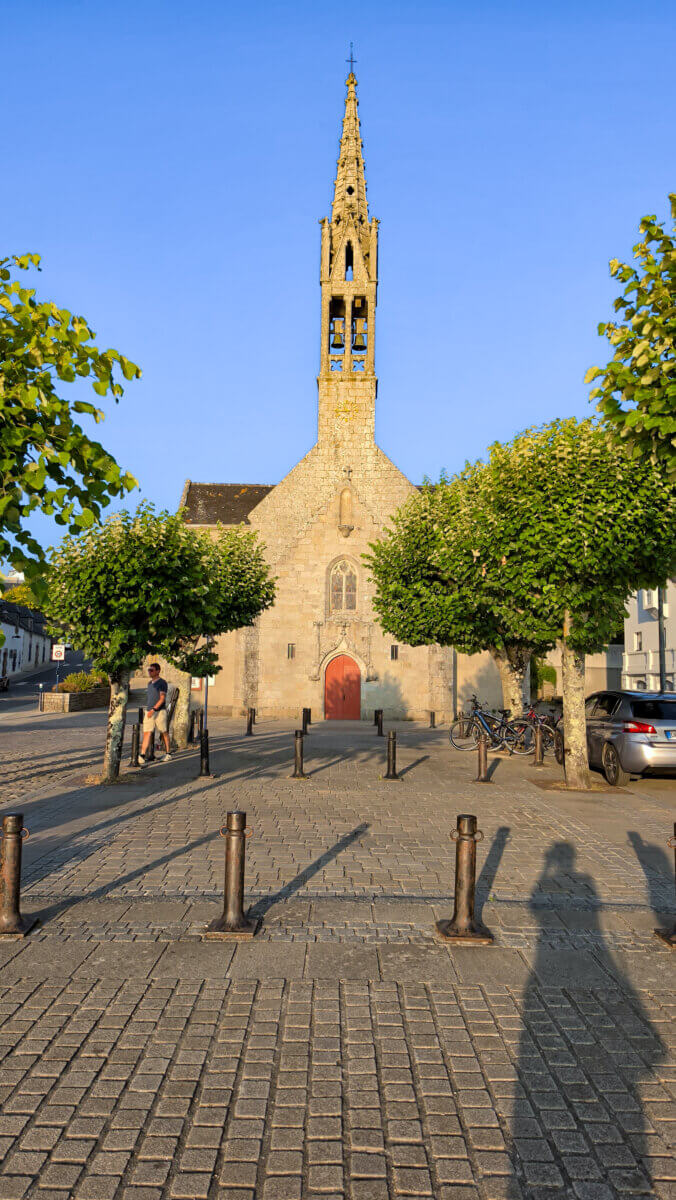
We had our car with us, so instead we drove across the bridge to Bénodet.
In Bénodet, we highly recommend trying the ice cream at Bankiz, an ice cream and waffle shop by the water. Their ice cream is delicious, they have tons of amazing flavours and the service was very good and super quick. Mom went for the passion Breton. Passion Breton is a French dessert combining passion fruit with Breton dairy ingredients, like local milk, butter, or Breton shortbread. It was sweet, creamy and slightly tangy.
PONT-AVEN (POUNT-AVEN)
Next up is Pont-Aven, which was another must-visit to add to your trip. It’s roughly a 30-minute drive from Lorient and about 30 minutes from Quimper.
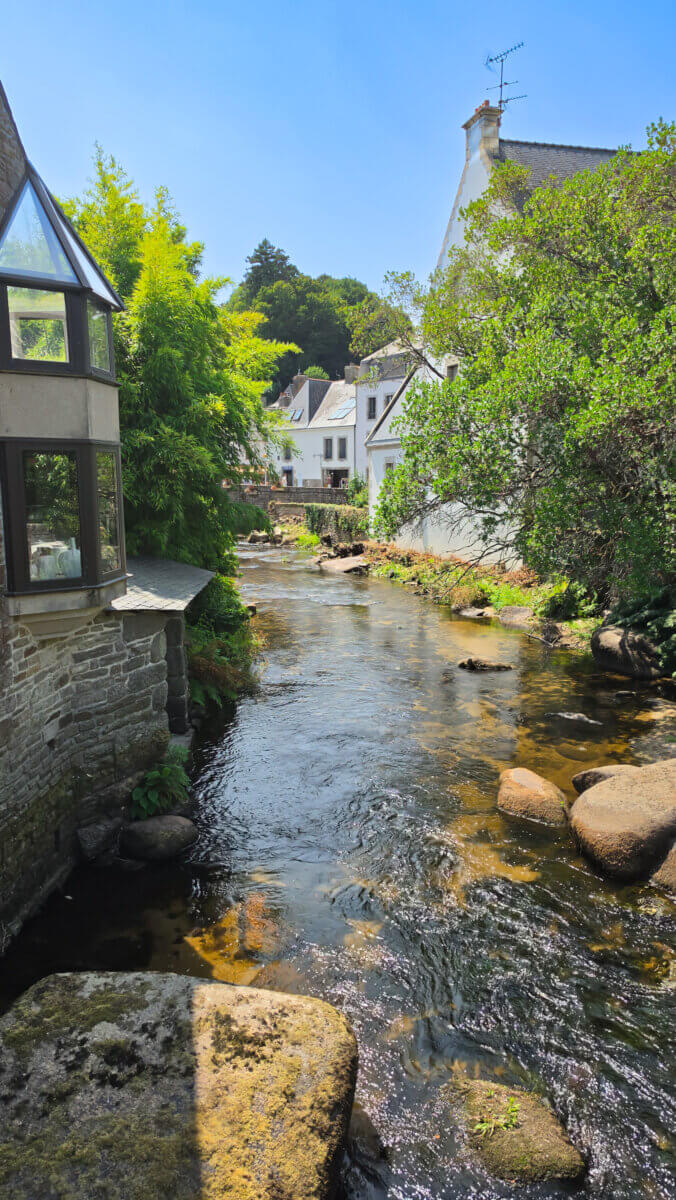
Pont-Aven is known for its art, pretty streets and the River Aven running through the village. Before it became famous in the art world, it was actually a prosperous trading port and milling centre.
One of the best things to do here is walk along the Promenade Xavier Grall and through the Bois d’Amour, or Wood of Love. You can walk underneath the trees, specifically beech trees, alongside their famous huge granite boulders, with the River Aven beside you. Our favourite part, and a famous detail in Pont-Aven, were all the little bridges in between the homes where you can walk and see the river flowing underneath. It’s stunning!
What to eat in Pont-Aven
And of course, we had to get something to eat. We stopped at Armelle Crêperie, where we had a salted caramel crêpe, which is our favourite, while the rest of the family had galettes filled with ham, egg and cheese. Galettes are a type of savoury crêpe made with buckwheat flour, called “blé noir” in French. They originally come from Brittany and are very typical in both Brittany and Normandy. However, in western Brittany, not every area calls them a galette. The main difference is that western Brittany tends to make them thicker and crispier, and they’re sometimes simply called “crêpes de blé noir,” while in eastern Brittany, they’re thinner and are always called galettes.
Salted caramel, on the other hand, is famous in Brittany because salt was historically cheap and easy to get there, so Breton people used lots of salted butter in their food and dessert making.
And if you have a sweet tooth, don’t leave without trying the famous Pont-Aven biscuits. They’re thin, crispy and golden, made with lots of Breton butter.
DOËLAN (DOLAN)
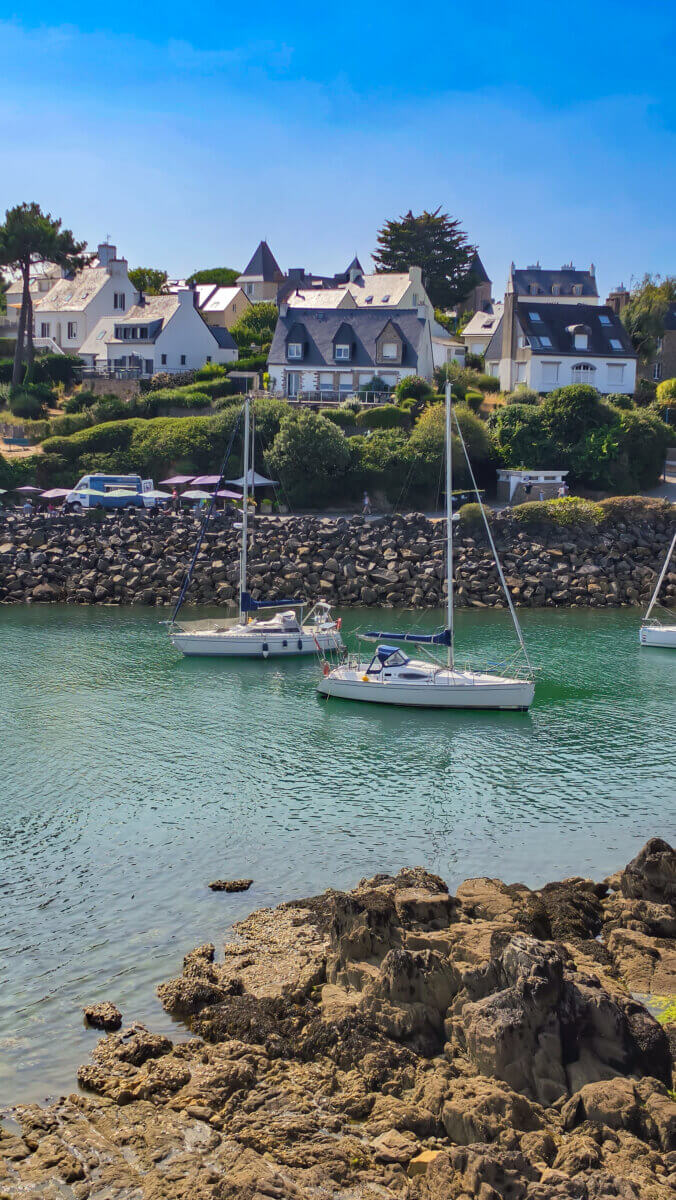
Doëlan is a gorgeous little fishing port, about 30 mins from Pont-Aven, with boats in the harbour, white cottages along the waterfront and two beautiful lighthouses, a red one and a green one, that work together as a pair of guiding lights for the narrow inlet.
It’s small, but it’s beautiful and definitely worth a visit for the vibe. Just walk around the harbour and take in the views.
These smaller ports were some of our favourite places in Brittany because they feel so peaceful and charming.
After Doëlan, on our way to our next destination, we decided to stop at Plage de Tahiti, or Tahiti beach for a swim to cool off and some tanning.
NÉVEZ & PLAGE DE ROSPICO
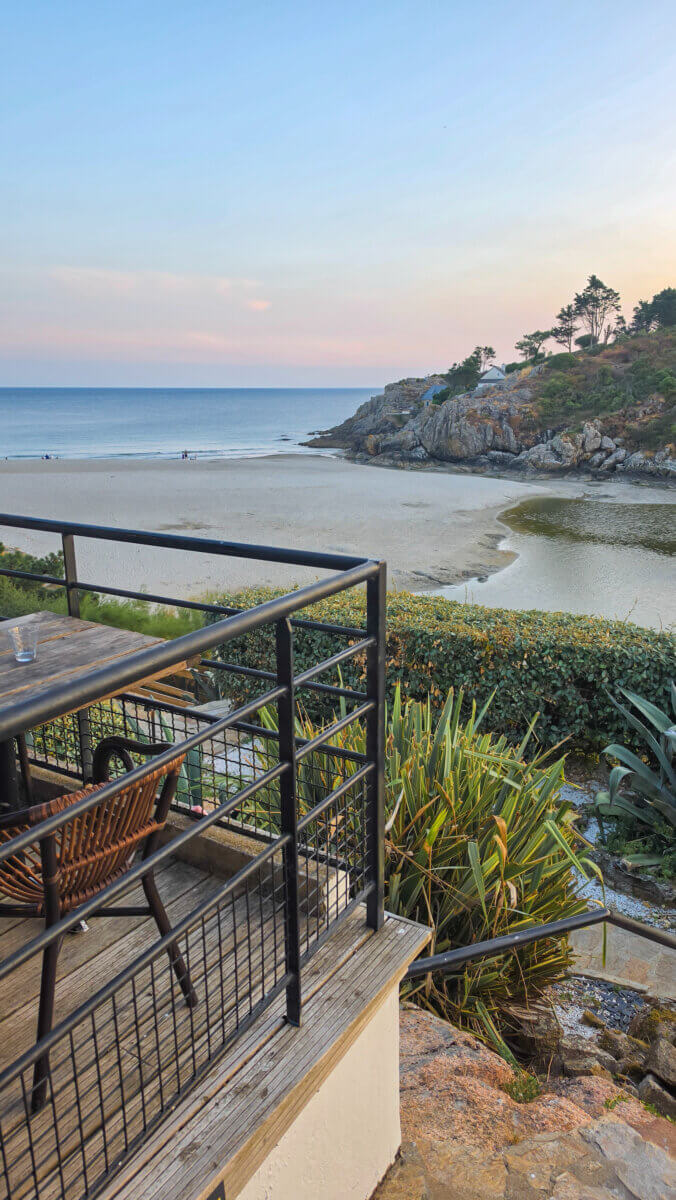
If there is one place we can recommend you add to your list, it’s Névez. Specifically, Plage de Rospico. Café de la Plage is tucked away next to Plage de Rospico, and this ended up being one of our favourite dinner spots in Brittany. Not just because the food was good, but the views of the beach were unmatched.
We ordered the fish and chips and the pork from the specials menu.
Both were good, but the highlights for me were the fried polenta that came with the pork and the crispy crust on the fish and chips.
For dessert, we shared the berry pavlova, which was nice and beautifully presented, but the real winner was the deconstructed lemon meringue. I genuinely could have eaten bucket loads of it.
We also ordered a gin and tonic, which went perfectly with the view.
LOCRONAN
One of the highlights of our entire trip was Locronan, and for a totally different reason than Plage de Rospico. We actually fell in love with this village before visiting because we’d seen a video of it, so we were really happy that we managed to add it to our Finistère road trip.
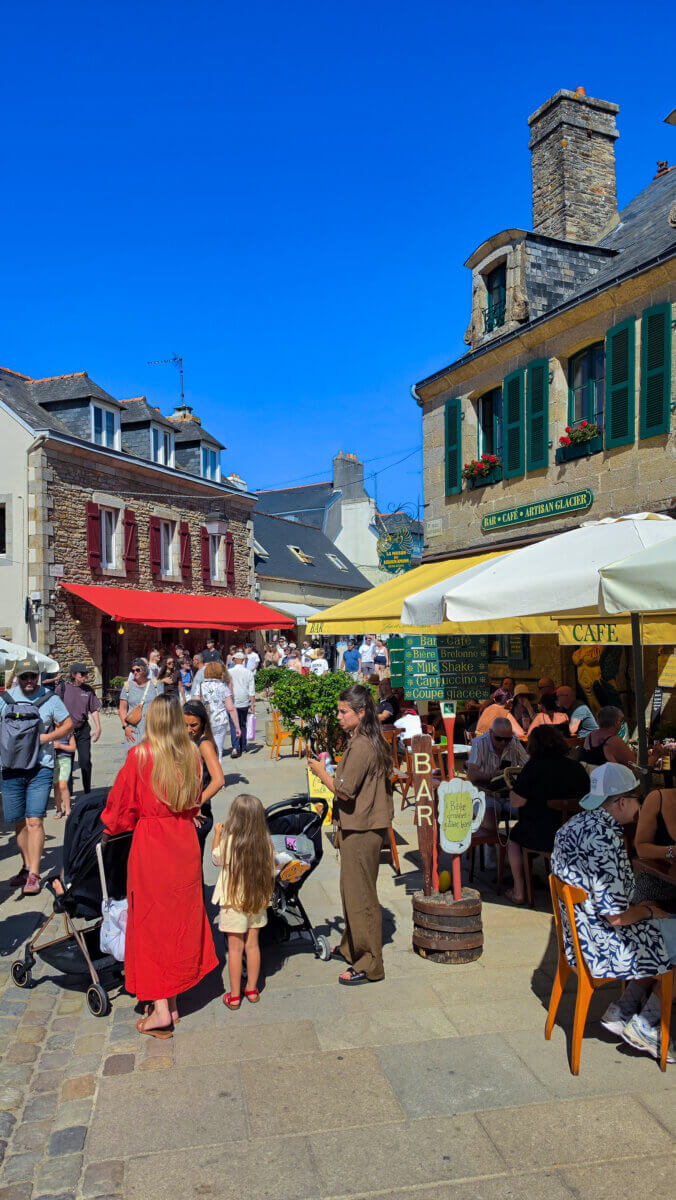
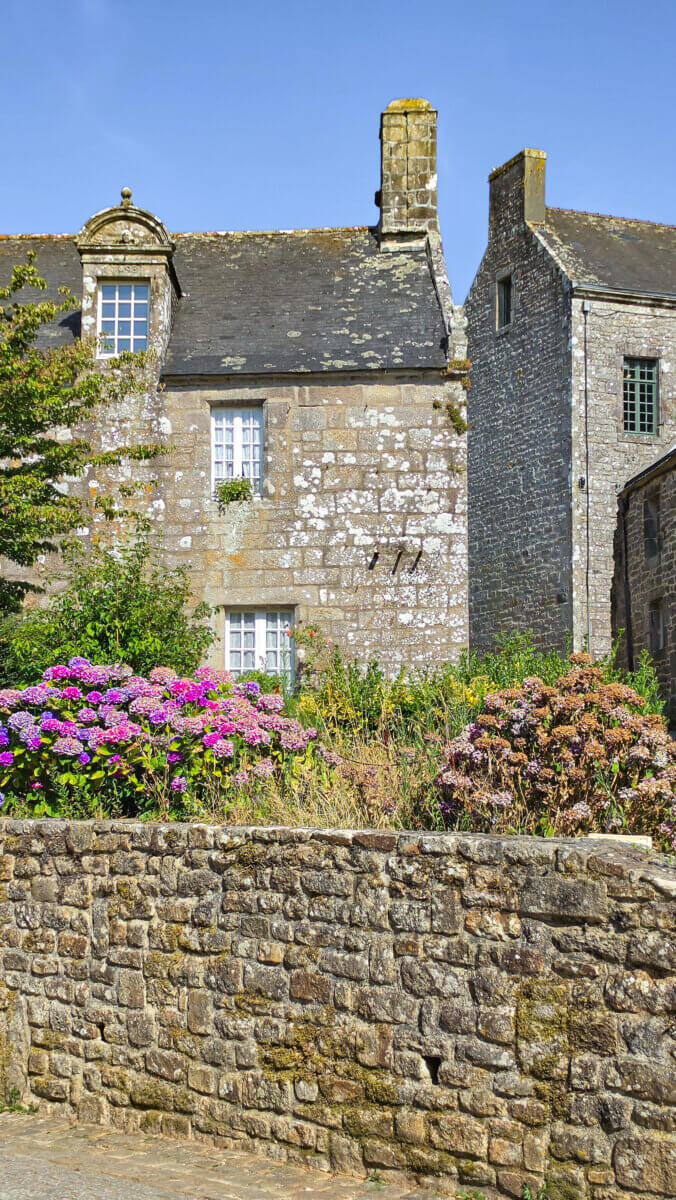
It’s easy to see why Locronan is listed as one of the Les Plus Beaux Villages de France. The village is beautifully preserved, with cobblestone streets, beautiful stone houses, colourful hydrangeas everywhere and loads of character. It genuinely feels like stepping back in time.
There are also lots of cute little gift shops and restaurants to browse.
We picked up a magnet for our collection and some Kouign-Amann. Ours were a little dry, we’ve definitely had better, but there were plenty of other things to look at, including the cutest sardine-print scarf, which we thought was really unique.
What to eat in Locronan
For an afternoon break, we stopped at Odette, and I loved the shabby-chic interiors.
We ordered a slice of lemon cake with candied lemon peel, which was so good, and a rooibos tea. Being South African, no other tea really does it for us.
You can also take a horse-drawn carriage ride through the village.
And when we visited, they were setting up the weekly market in the main square in front of the beautiful Church of Saint Ronan, so depending on when you visit, you might even be able to catch the market.
POINT SAINT-MATHIEU & LE CONQUET
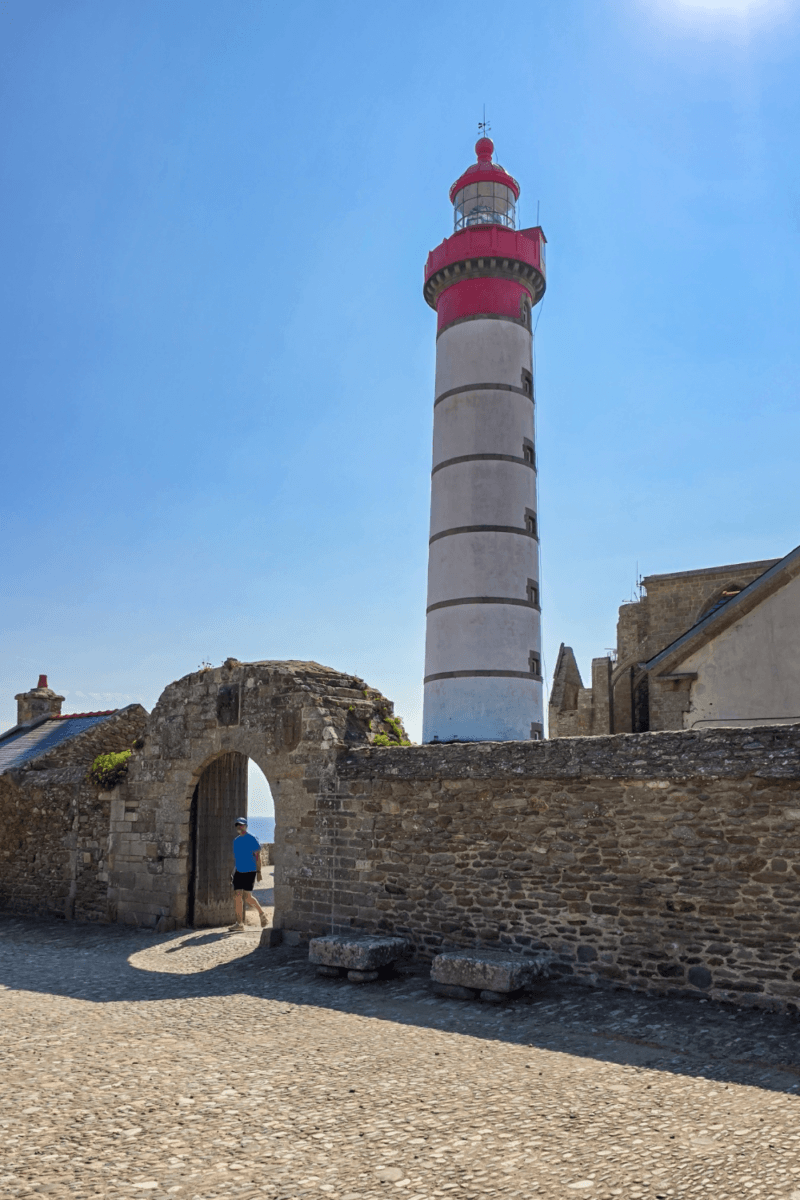
On our second last day, in all honesty we were quite tired and just felt like driving around and seeing what we could find along the way. We ended up having a drink in a hotel and walking around a place called Point Saint Mathieu with a beautiful red and white lighthouse.
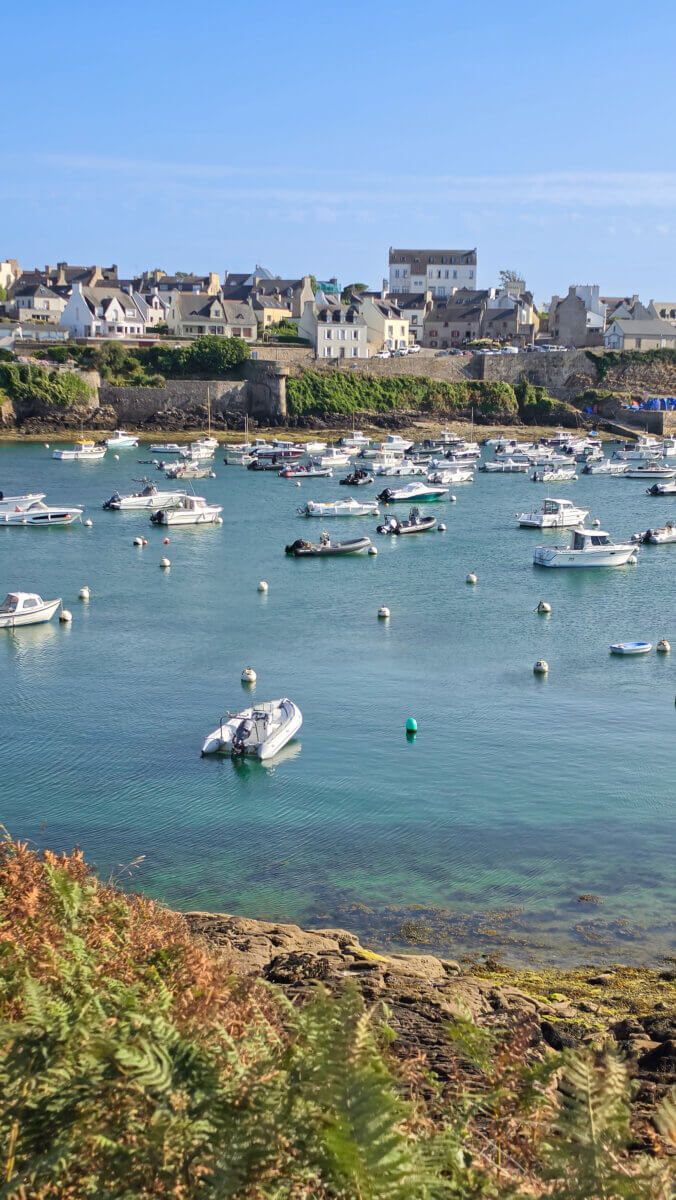
Another hidden gem we stumbled upon was Le Conquet. A little coastal village surrounded by turquoise water. This village was busy because they were hosting a festival, so we didn’t stay long and just ended up getting something to eat at a bakery. The festival’s name is Pleins Feux sur le Conquet. It’s an all-day outdoor celebration in July with street performers, regional bagads (traditional Breton pipe bands), pop concerts, and a late-night fireworks show.
FRESH – OUR BIGGEST BUDGET TRAVEL HACK
And one final tip, which made our road trip much easier: Fresh. After all these years travelling around France, we only recently discovered this place in Brittany.
It’s a smaller, curated concept store run by the Grand Frais group, and they’ve been opening them around the country since late 2017.
The thing that impressed us most was the grab-and-go section. They have pre-packed salads, wraps, sandwiches, fruit salads and more, but the quality is so good that they taste like they were made in a kitchen minutes ago rather than sitting around in a warehouse. The ingredients are really good quality, and unlike many of the big supermarkets, most of the products have no added preservatives.
We loved picking up lunch here, finding a cute spot with a view, and then going out for dinner in the evening. It’s a really good way to save money while travelling without just living off snacks, and you can still get in some nutritious food during the day.
The Fresh supermarket we went to.
Planning on visiting Eastern Brittany too?
If you’re planning on visiting Brittany for longer and are interested in seeing more places on the East of Brittany closer to Normandy, you’ll love our other Brittany road trip post where we visit places like Rennes, Saint-Malo, Vitré and Fougères.
Want more insider road trip hacks and get to see behind-the-scenes of our travels?
If you’re not already on the list, sign up to our weekly newsletter to stay updated, plus we share super useful travel tips!
Leave a Reply