There are a few things we’ve learned from travelling around Europe as a family over the years. From booking the wrong dates and arriving after the Christmas markets have closed, to choosing between a road trip and staying in one city. We’re sharing our practical tips to help you plan your Christmas trip, avoid some common mistakes and make the most of your time in Europe during the festive season.
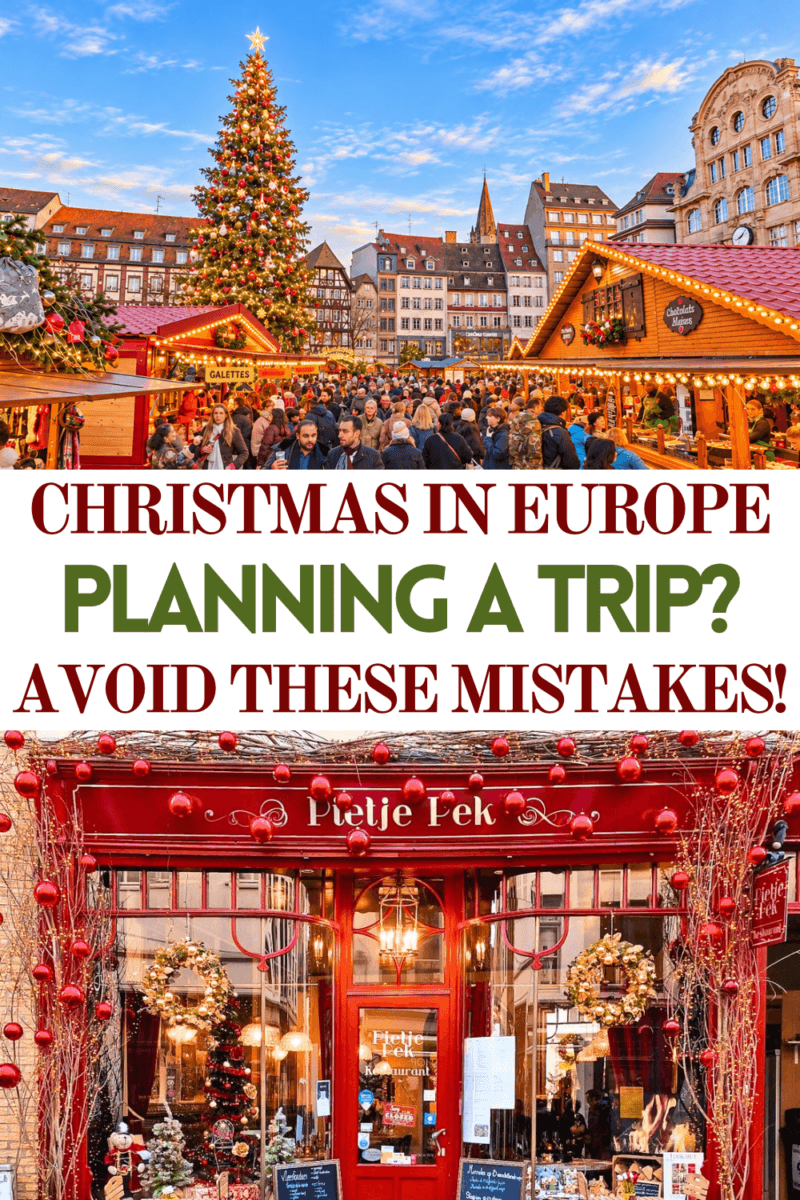
Christmas in Europe
Best Dates to Travel: Don’t Assume Markets Stay Open Through Christmas Day
One of the biggest mistakes people make when planning a Christmas trip to Europe is booking a trip from the 23rd to the 30th of December, expecting to visit Christmas markets every evening. Unfortunately, that’s not how it works in most of Central Europe. In countries like Germany, Austria and France, most traditional Christmas markets close around lunchtime on the 24th of December, and then everything pretty much shuts down on the 25th and 26th. So, if visiting Christmas markets is one of the main reasons for your trip, you need to plan around those dates.
Best time to visit Christmas markets in Europe
Generally, I would say the sweet spot for visiting Europe at Christmas is from late November until around the 20th of December. This is when you’ll get the full festive experience, with most markets open and cities still operating as normal. Just keep in mind, flights and accommodation are most expensive during this time, plus the more popular places will inevitably be very crowded.
Christmas in Europe during January
However, if you want to travel after Christmas, I’d look at destinations further south or east, like Spain or Poland. Festivities in these countries often continue into January, leading up to Three Kings Day on the 6th of January. Both countries also have Three Kings parades in many different cities and towns, which are really worth experiencing.
Another advantage is that you can often find some great flight and accommodation prices during the first week of January. The downside is that you’ll have fewer places to choose from if visiting traditional Christmas markets is a priority.

It’s also worth knowing that while some Christmas markets open as early as mid-November, many traditional markets in Germany, France and Central Europe only open around the fourth Friday of November. This year, that’s the 27th of November. So don’t assume that just because you’re visiting in November, all the markets will already be open.
Avoid this mistake when traveling in Europe for Christmas
We’ve actually made this mistake both ways. Last year, we visited Krakow and left on the 25th of November, just missing the official opening of the Christmas markets. Luckily, all the Christmas lights and decorations were already up, so the city still had a lovely festive atmosphere. And the flights were considerably cheaper at that time of year.
Then, later in December, we visited several towns in Bavaria and the surrounding regions of Germany and Austria, from the 24th to the 31st. We found that quite a few markets were still open, but not all of them. For example, the main Christmas market by the Golden Roof in Innsbruck had already closed.
So, the biggest takeaway here is to do your research before booking. Look at when the markets open and close in the specific places you want to visit, and plan around your budget and travel dates. And most importantly, think about how important the Christmas markets are to your trip. If they’re your main reason for visiting Europe, you don’t want to arrive just as everything is closing.
Road Trip vs. Being Based in One City
As a family of four who usually travel together, we tend to prefer road trips for quite a few reasons. We’ve learned a lot over the years about how to do them properly, but there are a few things you should know before deciding whether you’d prefer driving or basing yourself in one city.
We either use our own car and drive to the places we want to visit, or, if it’s too far, we fly to the nearest airport to our chosen base and rent a car from there.
Road trips
Driving definitely has its pros, and for us, they outweigh the cons. But it really depends on your needs, preferences and budget. It does cost more, but you get so much more flexibility. You can visit beautiful little villages and towns with charming Christmas markets that aren’t always easy to reach by public transport. That flexibility is especially important during winter because you’re not restricted by transport connections, schedules or having to figure out how the system works, particularly when you need to get somewhere in time to purchase tickets. Public transport can also take considerably longer, and it simply doesn’t reach everywhere.
These are our top 15 tips when visiting Christmas markets you need to know before you go!

However, if you’re driving somewhere particularly cold, where there’s snow or icy roads, you need to make sure your rental car has winter tyres. They’re not only much more convenient in these conditions, but they’re also legally required in certain countries and situations. We once drove our own car to Bavaria in Germany a couple of years ago and bought some tyre chains off Amazon. Let’s just say they didn’t work very well, and we nearly went sledging downhill on an icy road! It was terrifying. So, either invest in really good-quality snow chains or, ideally, rent a car that already has winter tyres.
You also need to factor in tolls, petrol or gas, and parking costs. It’s worth researching the parking options in each place you’re planning to visit, but we’ve found that a quick search on Google Maps usually does the trick.
When it comes to accommodation, we normally try to find a cute little town to use as our base, ideally no more than two hours away from all the places we want to visit. There’s really no need to change hotels every couple of nights, and staying in one place is usually much more affordable.
In last year’s post, we went through all the steps when planning a Christmas trip in Europe, including how we book the best and most affordable flights and accommodation, plus some other helpful tips, so definitely go check that out.
Staying in one destination
Of course, staying in one city or town has its advantages too. You’re not constantly driving around, and although you’ll only be exploring one main destination, you get to enjoy it properly without worrying about long drives. However, you’ll need to familiarise yourself with the public transport system, and you’ll probably need to make more restaurant reservations. Unless you’re planning to eat exclusively at the Christmas markets, which can get a little repetitive, you’ll probably want a proper sit-down meal every now and then. Eating at restaurants regularly can also take quite a bit out of your budget if you’re travelling on a budget.
This is something we find happens less often on road trips because you’re visiting several different Christmas markets in one day. You get plenty of variety from the different food stalls, so you might only need to sit down at a restaurant once or twice, depending on how long you’re travelling.
One thing we do recommend, regardless of where you’re staying, is making at least one restaurant reservation for Christmas Day if you’re travelling over Christmas. Booking well in advance is essential during this time of year, even in the smallest towns. Don’t assume you’ll easily find a table by just walking into a restaurant. Locals love spending Christmas with their families over lunch and dinner, so restaurants fill up everywhere, including in the smaller towns and surrounding areas.
When daylight ends in Europe in Winter
Another thing to keep in mind is how early it gets dark during winter. In many parts of Europe, daylight ends by around 4:30 PM. This clip was taken in Seefeld, Austria, just before 5 PM. Of course, you also want to experience the Christmas lights and markets once it’s dark, so you’ll probably want to stay out a little later. However, if you’re driving, you don’t want to leave it too late and end up driving on snowy or icy roads in complete darkness.
This is one area where public transport, particularly trains, can make things easier because you’re not having to worry about driving conditions. Just make sure you check the timetables beforehand so you don’t miss the last train back.

Packing & Pacing: Underestimating the Cold (and the Walking)
Don’t try to hit too many stops in one day, it can get exhausting walking around in the cold all day but also you won’t get to enjoy each place at a relaxed pace. In between the transport, crowds and weather, it can be very overstimulating so don’t rush to get from one place to another or see everything in one day.
What to wear in Europe during Winter
In terms of clothes, we suggest one really good coat that will go with all your clothes, that you don’t need to wear tons of layers that will restrict you and will have to put on and take off constantly when you go inside. And your underlayers, best if they are a good quality fabric that keeps you warm but adjusts to the temperature like merino wool. Earmuffs or a beanie and gloves are essential. We like to use gloves that allow you to use your phone so you don’t have to keep removing them to take pictures.
Wear comfortable shoes that you can walk in all day and won’t slip on snow or icy pavements, and warm thick socks. There’s nothing worse than not being able to feel your toes when you’re out and about or feeling like you could slip at any moment if you’re not careful.
We’ve linked all our favourite winter gear and clothes on our Travel Essentials Page!
Want more insider road trip hacks and get to see behind-the-scenes of our travels?
If you’re not already on the list, sign up to our weekly newsletter to stay updated. Plus, we share super useful travel tips!
Leave a Reply