If you’re planning a trip to Dublin Ireland, keep on reading. We’ve travelled to Ireland, especially Dublin, quite a few times as a family because we love it so much.
So today, we’re sharing our 10 favourite things to see and do in Dublin, including where we love to eat and what we’d actually order.
And we’ll also tell you which of Dublin’s most popular sights we think are worth your time, or if they’re overrated.
If we were to go back to Dublin and could only choose ten things to do, these are the ones we’d pick.
Our Top 10 Favourite Things to See, Do & Eat in Dublin Ireland
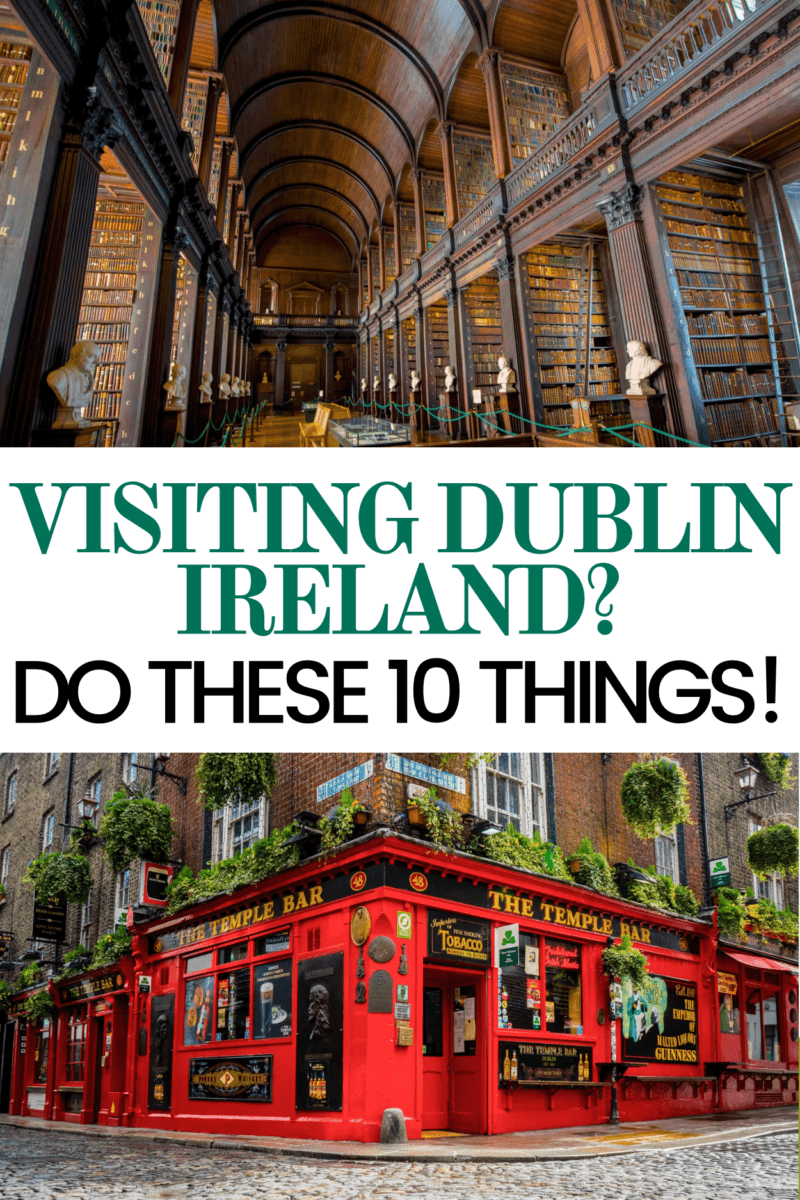
Trinity College + Library + Book of Kells
One of the highlights of our trip in February was visiting Trinity College Dublin. We did the Trinity Trails Campus Tour and Book of Kells Experience, and honestly, we loved it.
We paid €33.50 per person, which included the guided campus tour, the Book of Kells, the Old Library and a free audio guide.
The campus tour was led by a current Trinity student, which made it feel much more personal. As we walked around, we learned about the university’s history and some of its famous former students, including Oscar Wilde, Samuel Beckett and Bram Stoker.
Trinity College was founded in 1592 and is the oldest university in Ireland. It covers 47 acres right in the centre of Dublin, so there is quite a lot to see as you walk around.
What we saw at Trinity College
One of the first things you’ll notice is the Campanile, the famous bell tower in the centre of the campus. We also saw the statue of George Salmon, an Irish mathematician and theologian who was the head of Trinity College from 1888 to 1904.
There are some really interesting buildings around the campus too. The Rubrics is the oldest surviving building at Trinity, dating back to around 1700. We also passed the Museum Building, which has this really impressive Victorian Gothic design inspired by Byzantine architecture in Venice.
And then there’s the Sphere Within Sphere sculpture by Italian artist Arnaldo Pomodoro. It’s a huge bronze sculpture with a large sphere inside another sphere, and it definitely stands out as you walk around the campus.
Book of Kells and the Old Library
But of course, the main reason most people come here is the Book of Kells and the Old Library.
The Book of Kells is an incredibly detailed illuminated manuscript containing the four Gospels of the New Testament in Latin. It was created by Celtic monks around 800 AD, so it’s over 1,200 years old.
One of the pages we saw shows the Four Evangelists, each represented by a different symbol. Matthew is represented by a man, Mark by a lion, Luke by a calf or ox, and John by an eagle.
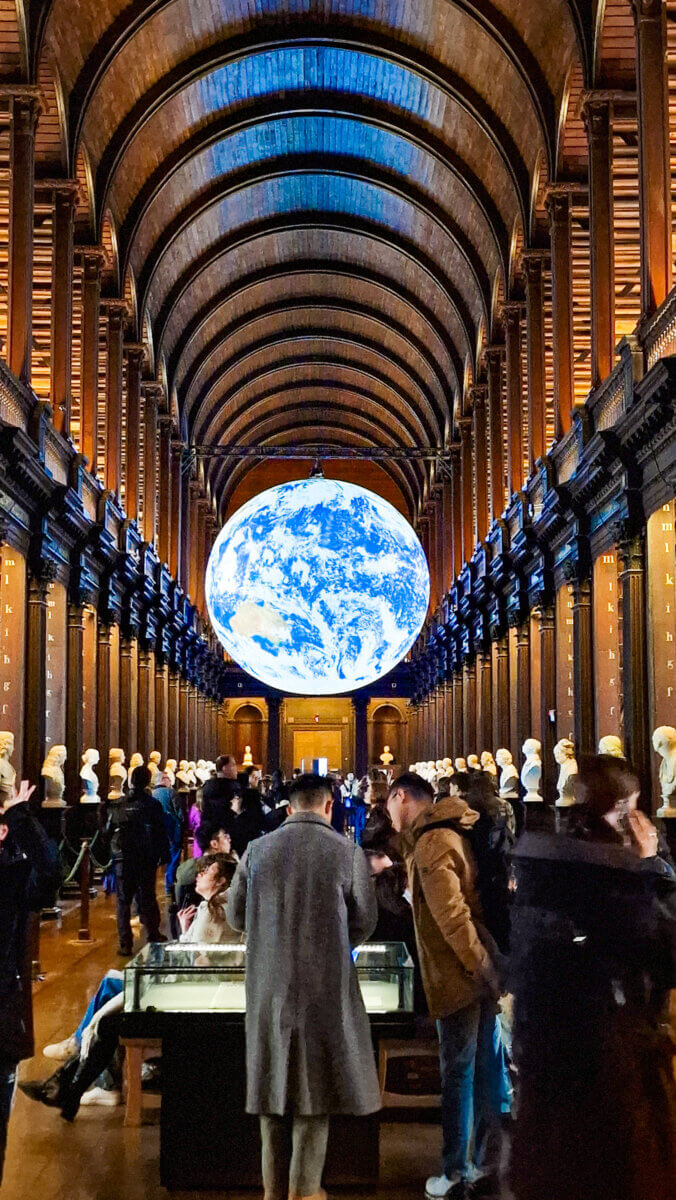
After seeing the Book of Kells, you walk into the Old Library, which is probably one of the most impressive parts of the whole experience.
The Long Room
The Long Room is absolutely beautiful, with rows and rows of old books lining the shelves. It feels like one of those places where you could spend ages just looking around.
For us, the whole experience was worth it because you’re not just going to see an old book. You get to walk around one of Ireland’s most historic universities, learn about the people who studied there, see some really interesting buildings and then finish with the Book of Kells and the Old Library.
2. Jamie Oliver’s Restaurant « Chequer Lane »
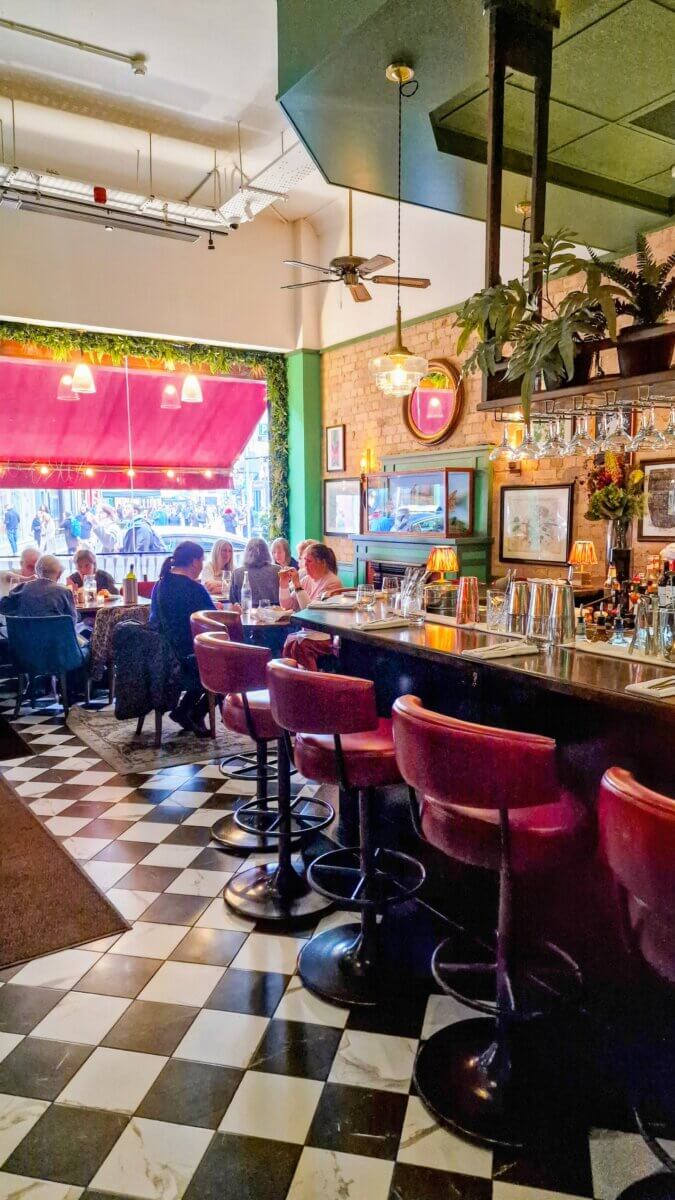
One place we really enjoyed eating in Dublin was Chequer Lane by celebrity chef Jamie Oliver, right in the city centre.
The concept of this restaurant is: hearty, seasonal Irish comfort food using locally sourced ingredients from Irish farmers, fishermen, and producers.
We had a really nice meal here. The atmosphere was great, the service was good and the food was really well presented.
For starters, I had the soup of the day, which was roasted pepper soup. For my main, mom had the duck, which came beautifully presented. Dad ordered the chicken with mash and a gravy-style sauce, which looked really good too. And of course, they had a Guinness with their meal.
For dessert, mom had the sticky toffee pudding, and dad had the chocolate mousse. Both were really good, and it was a nice way to finish the meal.
What I liked about Chequer Lane is that it doesn’t just feel like a typical Jamie Oliver restaurant. The menu focuses on Irish ingredients and takes inspiration from classic Irish comfort food, so it felt like a good place to try Irish food with a slightly more modern feel.
We had a really good experience here and would definitely recommend it if you’re looking for somewhere nice to eat in central Dublin.
3. Guinness Storehouse
If there is one place we recommend visiting, that isn’t a historical landmark, it’s the Guinness Storehouse.
The Guinness Storehouse is basically a massive traditional brewery all about Guinness beer, located at the St. James’s Gate brewery in Dublin.
It’s seven floors high, full of different spaces where you learn about the history of Guinness. How it’s made, the ingredients they use, and even some of their famous advertising over the years.
You can also do a Guinness tasting, and if you want to, you can learn how to pour your own pint at the Guinness Academy.
One of the highlights for us is the Gravity Bar at the top, where you get a 360-degree view over Dublin while enjoying a Guinness, Guinness 0.0 or a soft drink, depending on your ticket.
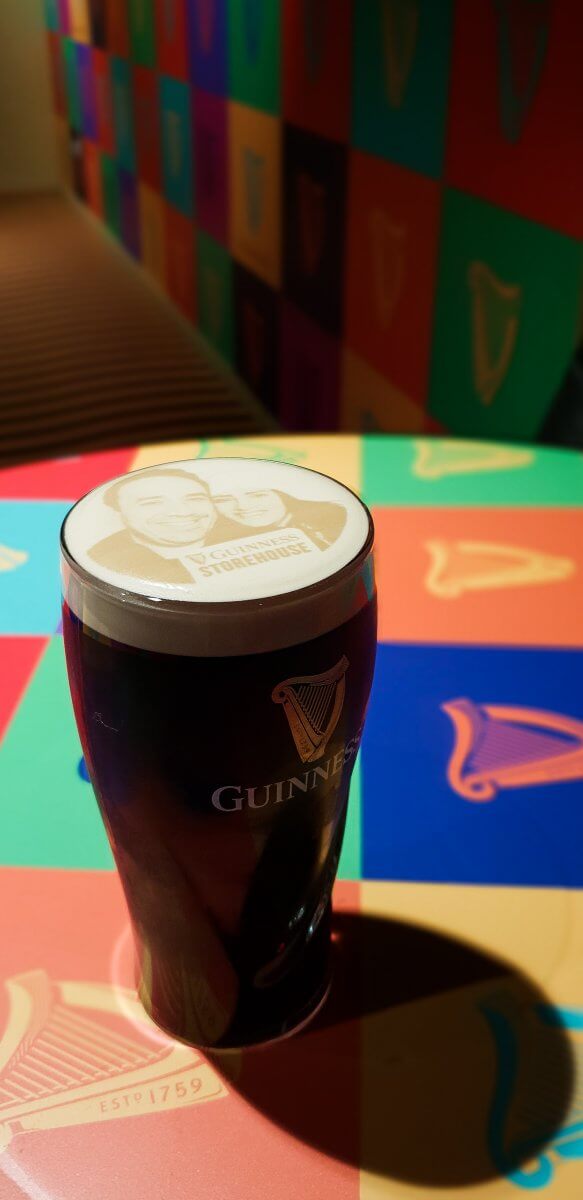
The one thing we recommend doing before you leave is getting a STOUTie (stout and selfie combined). You get a selfie printed onto the foam of your Guinness for around 10€. Not cheap, but very fun. If you choose to bundle everything together from the start, a combined Guinness Storehouse Experience + STOUTie ticket starts at €32 per person.
But Ireland isn’t just known for their beer, also their whiskey. Next on the list…
4. Jameson Distillery Bow St.
The Jameson Distillery Bow St. is the home of Jameson Irish whiskey, right in the centre of Dublin. Mom, dad and my brother came here in 2019 and decided they had to take me to see it for myself on our trip in 2024. There’s a lot to see and learn even for kids, so if you’re traveling as a family, don’t think you have to skip this.
It’s not actually a working distillery anymore, but you can take a guided tour and learn about the history of Jameson, how Irish whiskey is made, and what makes it different from other whiskeys.
You’ll see some of the old distillery buildings and equipment, and there are a few tastings included too, so you actually get to try the whiskey as you go.
Depending on the experience you book, you can also learn how to make a whiskey cocktail, and obviously there’s a shop if you want to take a bottle of Jameson home with you.
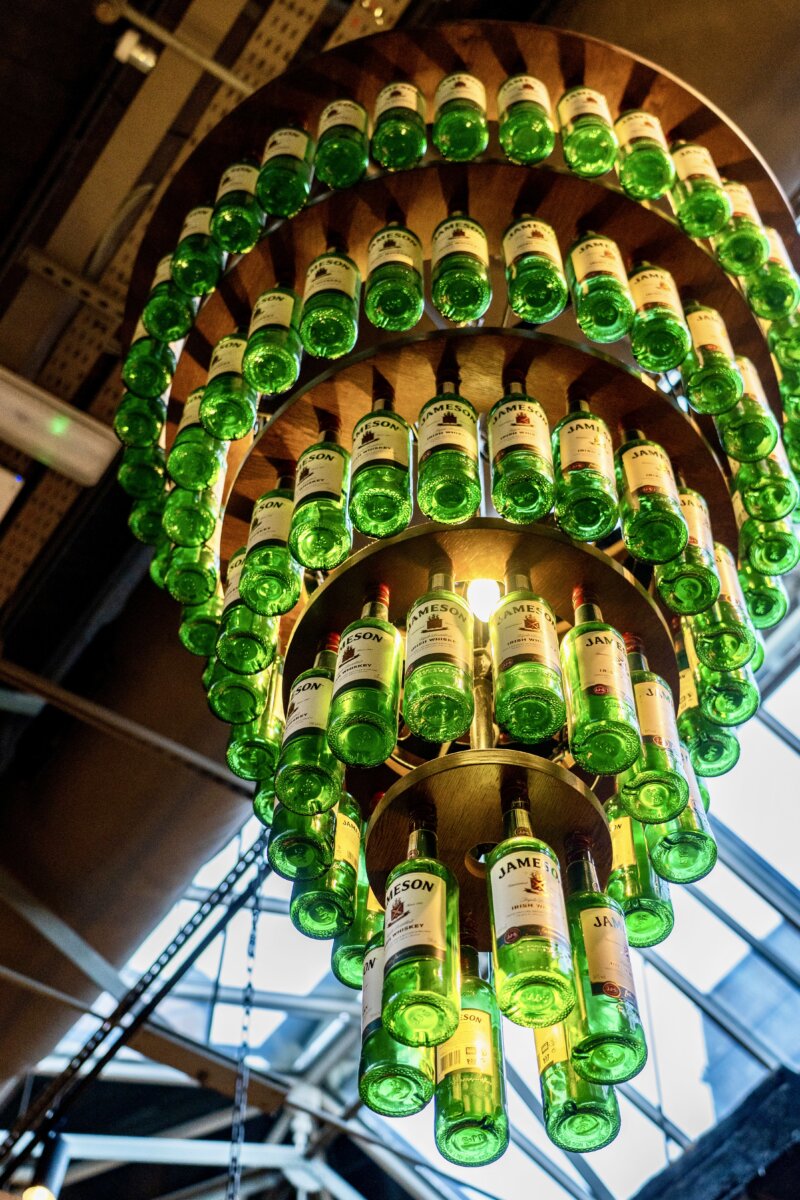
Our favourite section was the bar area, the decor is amazing with that rustic, industrial feel. What stood out were the massive chandeliers made with bottles of Jameson. At the bar, for those who drink alcohol, you can enjoy some whiskey or one of their cocktails made with Jameson whiskey like a classic whiskey sour, an old fashion or even Irish coffee.
Don’t leave without getting your free « official Jameson brand ambassador » certificate as a souvenir.
5. Temple Bar Area
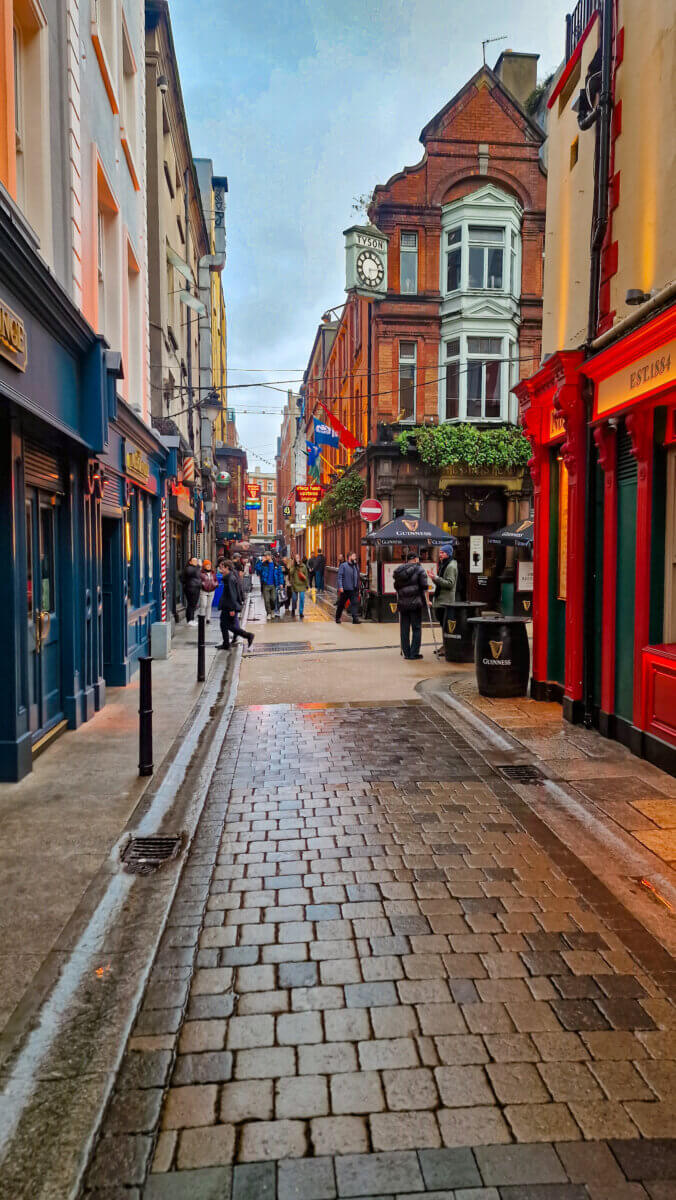
Temple Bar is probably the most famous area for its pub scene in Dublin, and it’s one of our favourite places to walk through even if we don’t plan on ordering a Guinness at one of the pubs. It’s a small area in the centre of Dublin, with cobbled streets, colourful pubs and many places to eat, have a drink and listen to some great live music played by local musicians.
The most famous spot is Temple Bar itself, which is that iconic red pub you’ll see in pretty much every photo of Dublin. Keep in mind that the prices here can be higher than in other pubs around the city. However, we still think it’s worth it. Yes, it is « touristy », but it’s also a big part of the Dublin experience. We don’t think it’s overrated at all. It’s beautiful, has an amazing vibe and you have to see it at least once.
And it’s not just about drinking. A lot of the pubs serve proper Irish food, so you can sit down with a Guinness and order things like seafood chowder, or a traditional Irish stew.
- Irish stew – lamb or mutton cooked slowly with potatoes, onions and carrots in a rich broth.
- Fish and chips – Battered fried fish with chunky chips, often served with mushy peas and tartar sauce.
- Seafood chowder – One of our absolute favourites in Irish pubs, it’s a creamy soup made with fish and shellfish, usually with potatoes and vegetables.
- Shepherd’s pie – Minced lamb cooked with vegetables and gravy, topped with creamy mashed potato and baked.
- Beef and Guinness stew – Beef slow-cooked with Guinness, vegetables and a rich gravy, usually served with mashed potatoes.
6. Ha’penny Bridge & Liffey River
The Ha’penny Bridge is one of Dublin’s most famous bridges. It’s a small, white iron footbridge that crosses the River Liffey and connects the north and south sides of the city.
It was built in 1816, and it got its nickname because people originally had to pay half a penny to cross it.
It only takes a few minutes to walk across, but it’s worth stopping for the views of the river and the city. It’s also right in the centre of Dublin, so it’s really easy to include in your itinerary.
7. Famine Memorial
The Famine Memorial is a group of bronze sculptures along the River Liffey, near the Custom House in Dublin.
The sculptures show people walking away from their homes, carrying whatever belongings they have with them, during the Great Famine, which happened in Ireland between 1845 and 1852.
The Great Famine was a devastating period in Irish history, when a potato disease destroyed much of the country’s main food supply. Around a million people died, and another million or more left Ireland.
The memorial is right along the river, so it’s easy to visit while you’re walking around central Dublin. There’s no entrance fee, and you only need a few minutes to stop and take it in.
It’s definitely a different side of Dublin compared to places like Temple Bar, but I think it’s worth visiting because it gives you a better understanding of Ireland’s history and why the famine is still such an important part of the country’s story.
8. Costa Coffee
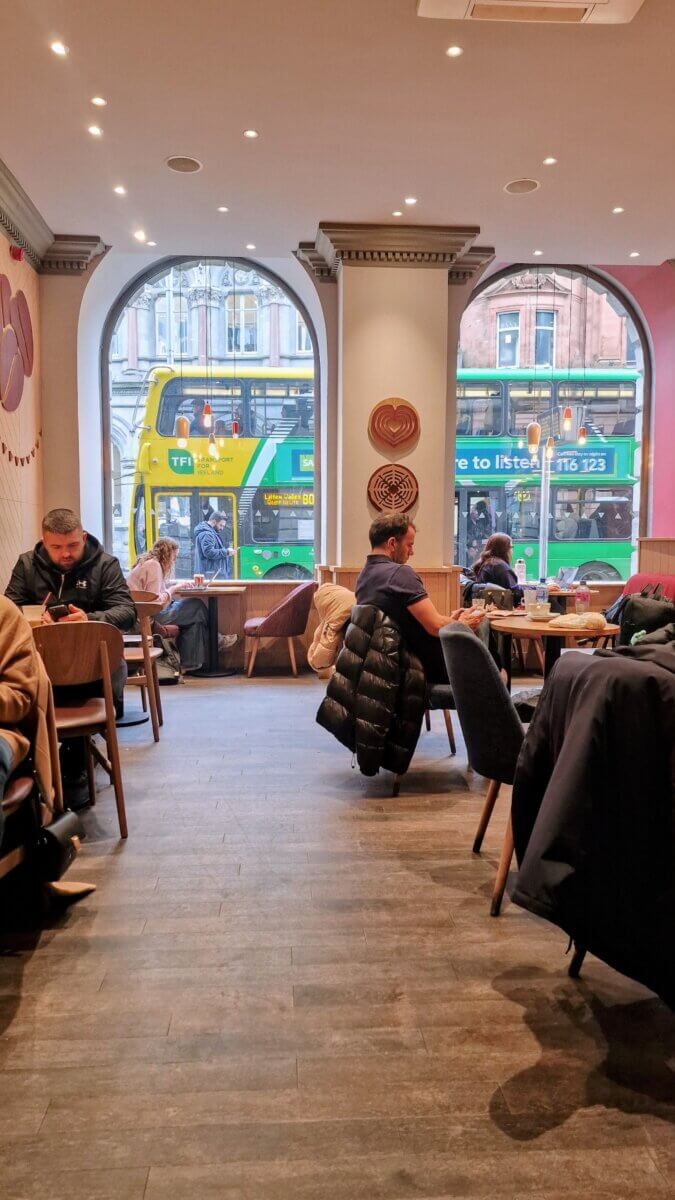
We love the vibe at Costa and we try to go every time we’re in the UK or Ireland.
Costa Coffee is basically the UK’s equivalent of Starbucks, although they have both. Today, you’ll find Costa cafés all over the UK and in many other countries, like Ireland of course.
They serve coffee, tea, hot chocolate, pastries and light food. We actually love to come here for a quick breakfast before we start exploring.
Costa also has coffee related merch, just like Starbucks, like reusable cups, travel mugs. Another place we love that is similar in concept is Caffè Nero.
9. St. Patrick’s Cathedral
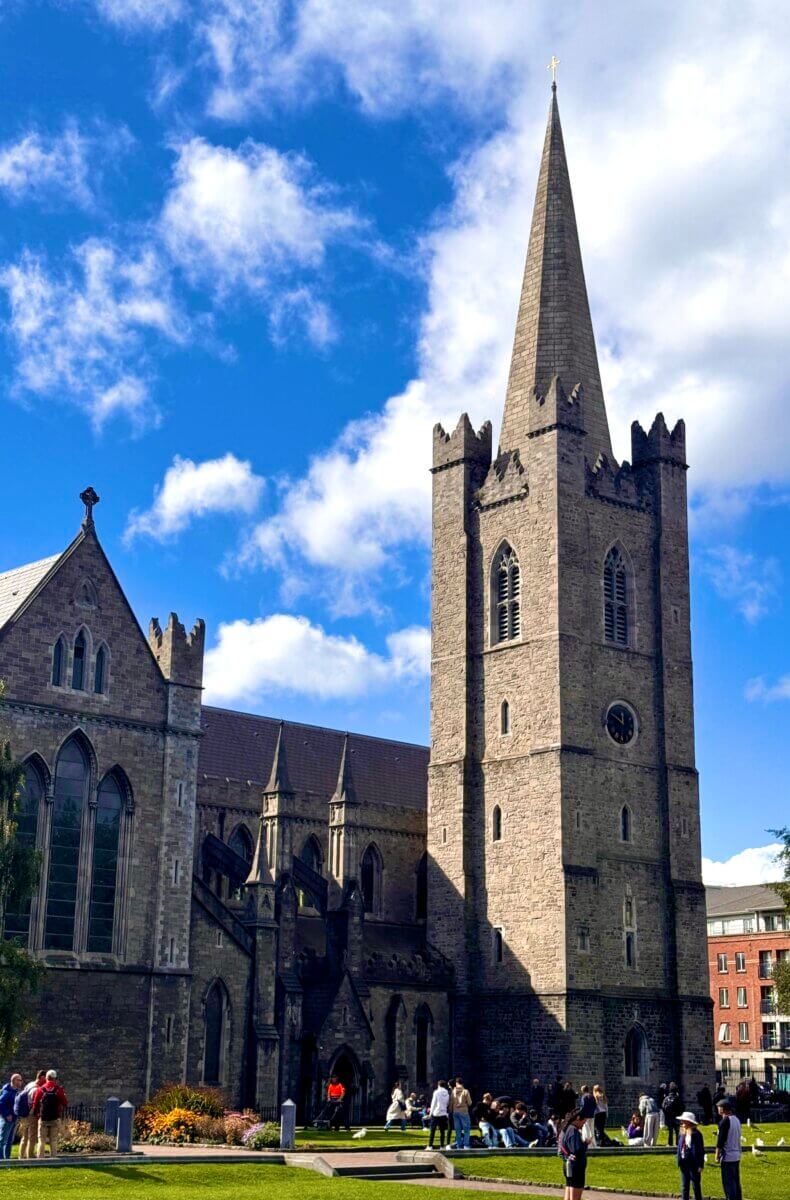
St Patrick’s Cathedral is one of the most famous historic buildings in Dublin, and it’s actually the National Cathedral of the Church of Ireland. We absolutely love this cathedral, the building is beautiful and so are the gardens around it.
The cathedral you see today dates from the 1200s. It was built on a site linked to Saint Patrick, who is said to have used a nearby well to baptise people. Although the site of what is believed to be the official site is in Trinity College, locked away from public view.
Inside, we suggest walking around, looking up at the beautiful stained-glass windows, old monuments, historic graves and learning about Ireland’s history.
One of the most famous people buried here is Jonathan Swift, the author of Gulliver’s Travels, who was also Dean of the cathedral for more than 30 years.
Another interesting story. In 1492, two powerful Irish families, the Butlers and the Fitzgeralds, were involved in a violent feud. When the Butlers took refuge inside the Cathedral, Gerald FitzGerald offered to make peace. He put his hand through a hole in the door, risking his own arm to show that he meant it. The two sides shook hands through the door, which is now known as the Door of Reconciliation.
You can explore the cathedral with a self guided tour included with admission. We’ve linked the official website to buy tickets or find out more. And if you happen to visit during a service, you can attend for free.
10. St. Stephen’s Green Park
St Stephen’s Green is right in the centre of Dublin, just off Grafton Street.
It’s a big park with lots of trees, flowers, paths and a lake with ducks and swans. You’ll also find little bridges, a waterfall and a bandstand as you walk around. We highly recommend just coming here for a walk, especially in Autumn. Grab a nice warm coffee at Costa and just relax in nature.
There are quite a few statues and memorials around the park too. And just across from the park in Merrion Square, you can see the really unique Oscar Wilde statue. Instead of the usual bronze statue, Oscar Wilde is reclining on a huge rock in a green jacket, with the different parts of his clothes made from colourful stones like jade and pink thulite.
And there’s some interesting history here too. During the 1916 Easter Rising, the park was taken over by rebels, and you can still see bullet marks on Fusiliers’ Arch at the Grafton Street entrance.
There’s a playground as well, so if you’re travelling with kids, it’s a nice place to stop and let them run around for a bit.
Want more insider road trip hacks and get to see behind-the-scenes of our travels?
If you’re not already on the list, sign up to our weekly newsletter to stay updated. Plus, we share super useful travel tips!
Leave a Reply