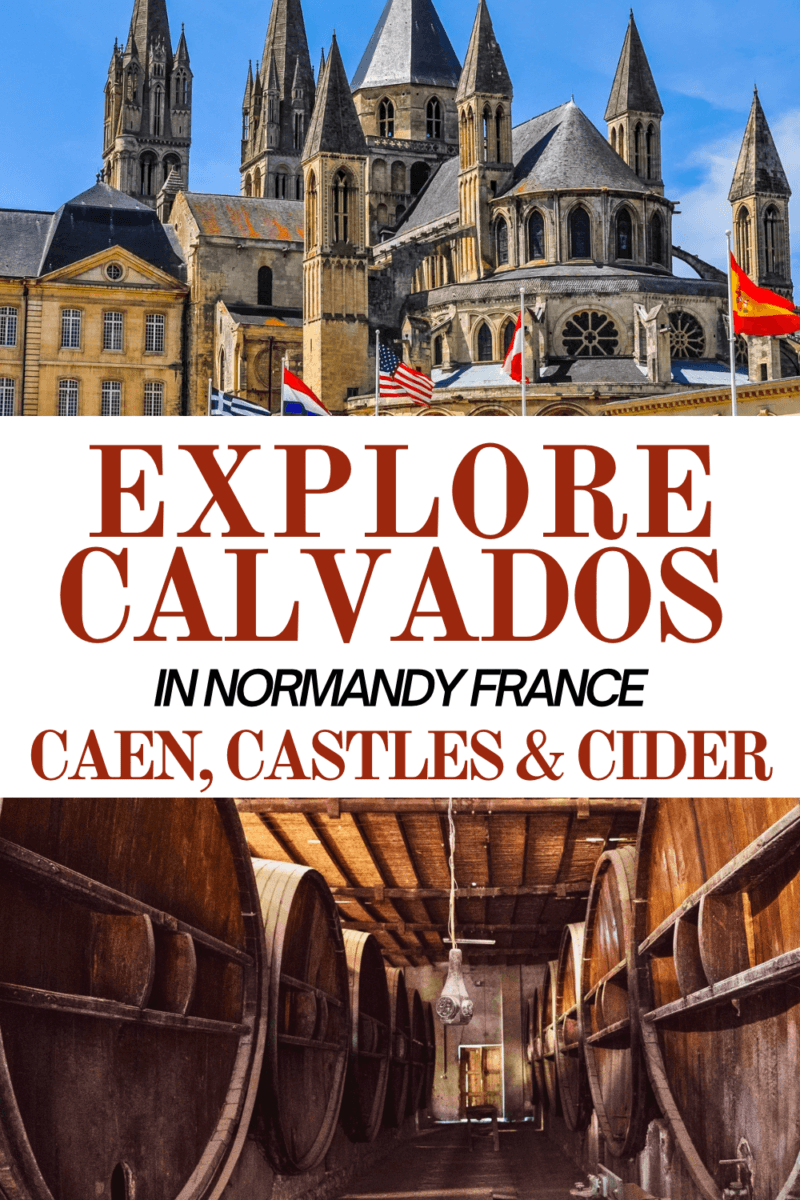
When most people plan a trip to Normandy, they usually focus on places like Mont Saint-Michel, Étretat or the D-Day beaches. But there’s another part of Normandy that deserves way more attention: the Calvados region.
In this video we’re spending time in Caen, the capital of the region, showing you what to see, where to eat and whether it’s actually worth visiting. We’re also visiting a medieval château and preserved lordship where you can experience what life was like in Normandy’s Middle Ages. Driving part of the cider route to visit a local distillery for a tasting and to learn how these drinks are actually made.
PART 1: Caen Normandy, the capital of Calvados
Caen is a city in Normandy in northwestern France and it’s the capital of the Calvados department. It’s often used as a base for exploring this part of Normandy because it’s close to places like the D-Day beaches, Bayeux, Honfleur and the cider route. If you stay somewhere else like we did, you can easily see Caen in a day.
It’s most known for its connection to William the Conqueror, who built Château de Caen and also founded two major abbeys in the city: Abbaye aux Hommes and Abbaye aux Dames. It was also heavily bombed during World War II during the Battle of Caen after D-Day. So it has a mix of historic landmarks and rebuilt modern areas.
Château de Caen
This is a great place to start if you have a car since there is a paid parking lot right next to it, where we parked. Plus it’s close in walking distance to the rest of the landmarks. It’s one of the largest medieval fortresses in Europe and it was built by William the Conqueror in the 11th century. You can walk along the old ramparts for views over the city. Inside you’ll also find gardens and two museums, the Museum of Fine Arts and the Normandy museum. You can visit both museums for 8€. However, walking around the grounds is free, and definitely worth it.
Abbaye aux Hommes
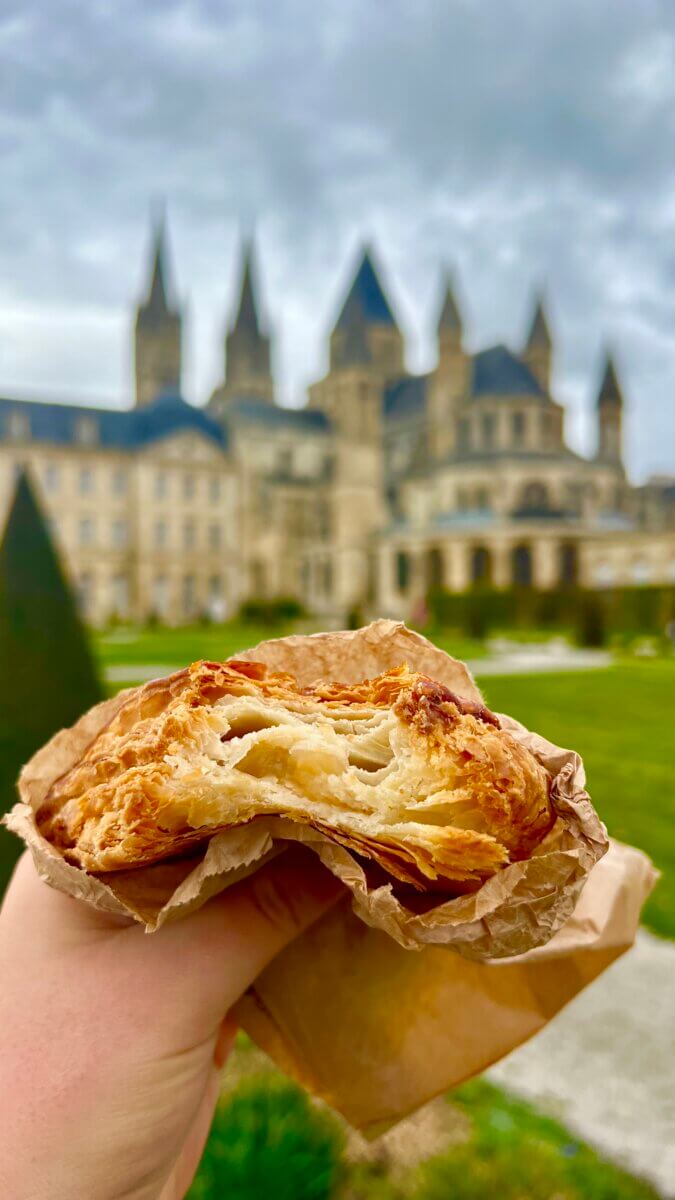
This is a former monastery also founded by William the Conqueror. It’s known for its stone architecture and this is also where he is buried. Today part of it is used as Caen’s town hall, but you can still visit the abbey church for 6€. However, just walking in the gardens is enough.
Abbaye aux Dames
This was founded by William’s wife, Matilda of Flanders. It’s a little quieter than the other abbey and has a large park behind it that’s nice for a walk.
Eglise Saint Pierre
We also visited the Eglise Saint Pierre. It’s interesting because it has a mix of gothic and renaissance architecture since it was built over 300 years, from 1200 to 1500. The spire you see today is a replica since the original was destroyed in the battle of Caen in 1944.
Get this audio guide for your phone while you explore Caen at your own pace.
If you would rather go for a guided tour, check this 1 hour express tour of Caen.
As you go from the castle to the Abbey, make sure to stop by the statue of Louis XIV. Caen originally put it up to honor the king, but it was destroyed during the French Revolution, and the version you see today was rebuilt later.
Where to eat in Caen Normandy
For lunch, we sat down at Maison La Poterne. A beautiful restaurant with modern French countryside decor and really good food typical of Normandy.
We ordered snails as a starter because, when in France, you have to eat escargots. They were buttery, garlicky, and delicious.
For mains, one of the dishes that stood out was the Andouillette sausage. It’s a traditional French sausage made from pork intestines. Served with Camembert cheese sauce (Camembert is local to Normandy) and fries. The sausage was definitely interesting but very delicious, and the sauce was so creamy and good that we ordered extra on the side. The fries were perfectly crispy on the outside and soft in the centre.
For dessert…
For dessert, we ordered profiteroles covered in chocolate sauce and stuffed with ice cream. I’m not a big fan of choux pastry and I still loved them. We also had the salted caramel rice pudding, and the only thing we didn’t like was that it didn’t have more caramel sauce.
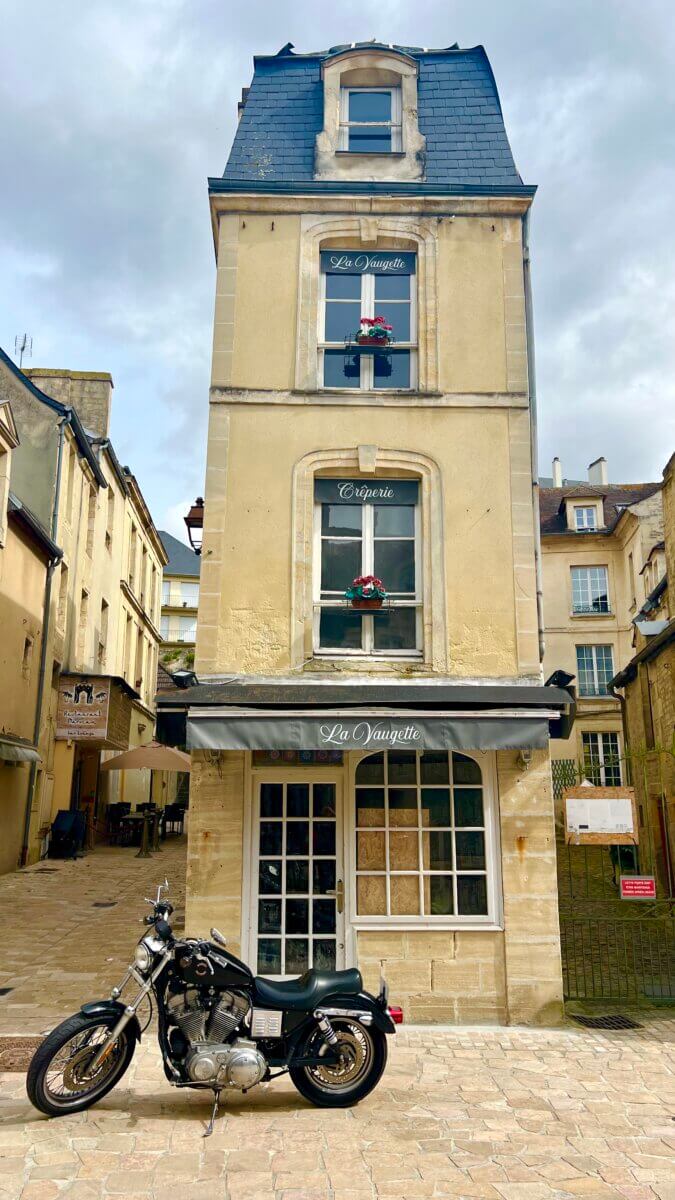
The service was excellent and we highly recommend this restaurant. Plus, the surroundings are lovely, with cute buildings and little restaurants all around.
And if anything in this household we have a sweet tooth so we went to a nearby bakery called Talemelerie Guillaume to pick up some pastries to eat on our way to the abbey.
Where to Stay in Caen
Budget friendly hotel…
- Maison Alternativi – Practical, clean rooms in the heart of the historic neighbourhood.
Medium budget hotel…
Luxury hotel…
PART 2: Château de Crevecœur, a medieval lordship frozen in time.
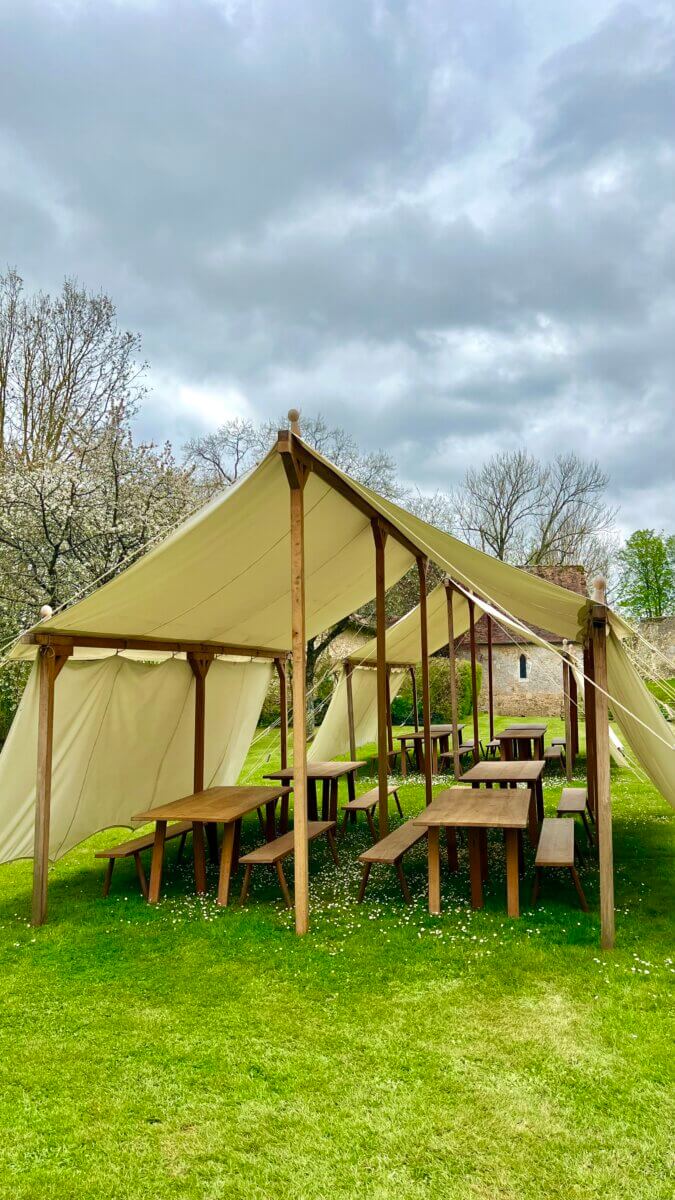
Château de Crevecœur is a preserved medieval lordship from Normandy’s Middle Ages. It is made up of what used to be the farm where the servants and farmers lived and the castle surrounded by a moat. There is also a chapel, a picnic area and a very interesting museum you might not expect.
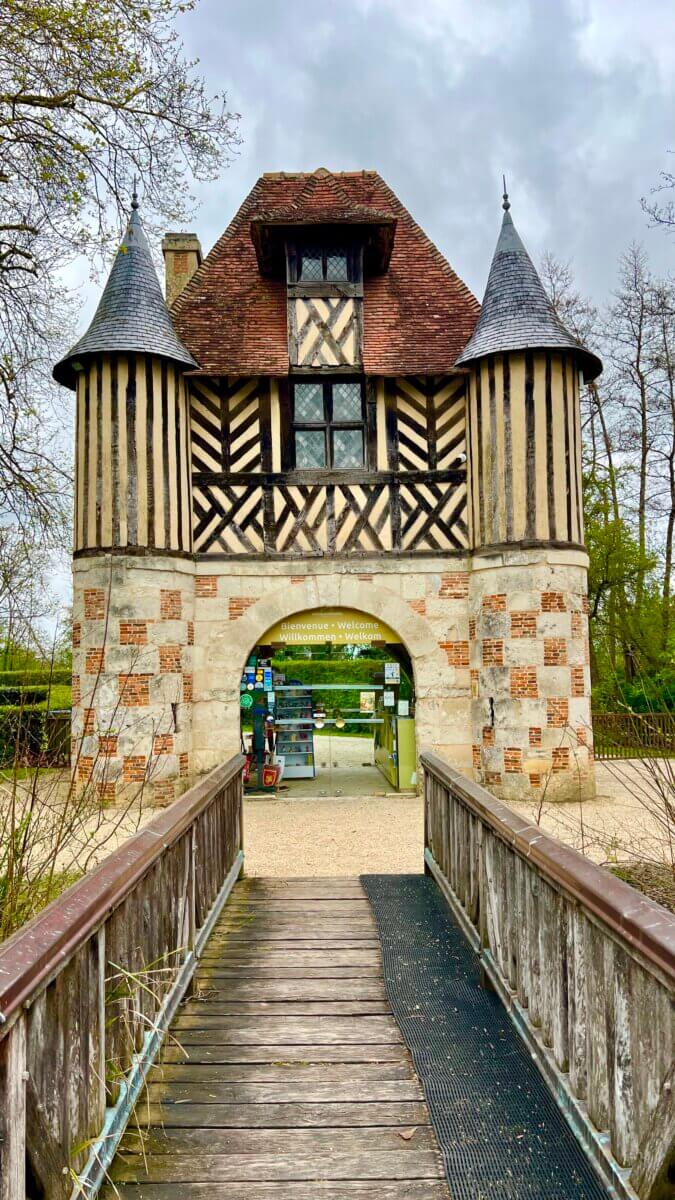
When you first arrive, you’re greeted with a small château that serves as the ticket office and gift shop. The ladies working there were extremely kind and helpful and explained how to walk through the castle grounds.
You first walk over the bridge of the moat. To the left you start by going into the farmer’s house, staged to look like that period of time. Inside, you learn about the different grains they harvested, a typical meal a humble family at that time would eat, and what their main bedroom looked like.
Schlumberger Museum
Next is the Schlumberger Museum. The museum lets you step into the role of an engineer and follow the journey from the early 1900s to today. Through interactive exhibits that you access with a card, you’ll see how major inventions changed scientific research and what working in the field was really like.
The Schlumberger Museum is at Château de Crèvecœur because the Schlumberger family had strong ties to this area of Normandy after settling here in the late 1800s. In 1912, Conrad Schlumberger tested an invention on the family’s nearby land that helped detect what was underground using electricity. He and his brother Marcel later turned that idea into the world’s first modern oil exploration method, so the museum is here because this is where those early experiments began.
After that, we walked around the farm area where there are some medieval games that children and families used to play together.
Fun, or not so fun, fact: in the Middle Ages, people loved sports and games like ball games, tennis, toy sword fights, and jousting. But during the Hundred Years’ War, King Charles V of France banned most games so people would focus on practicing archery and crossbows to prepare them for war.
What we loved about this place was all the different games you could play. In the chapel there were medieval board games, a dice throwing game and a reading nook with children’s books. Plus some artefacts from that time period.
Chateau de Crevecœur
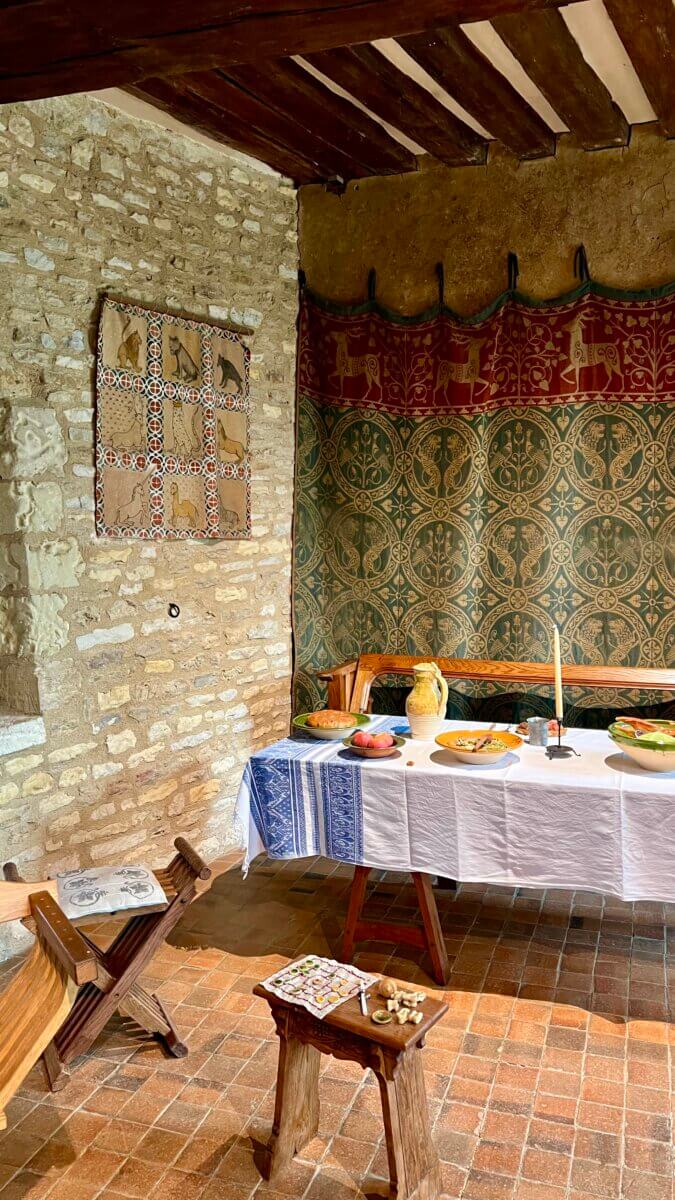
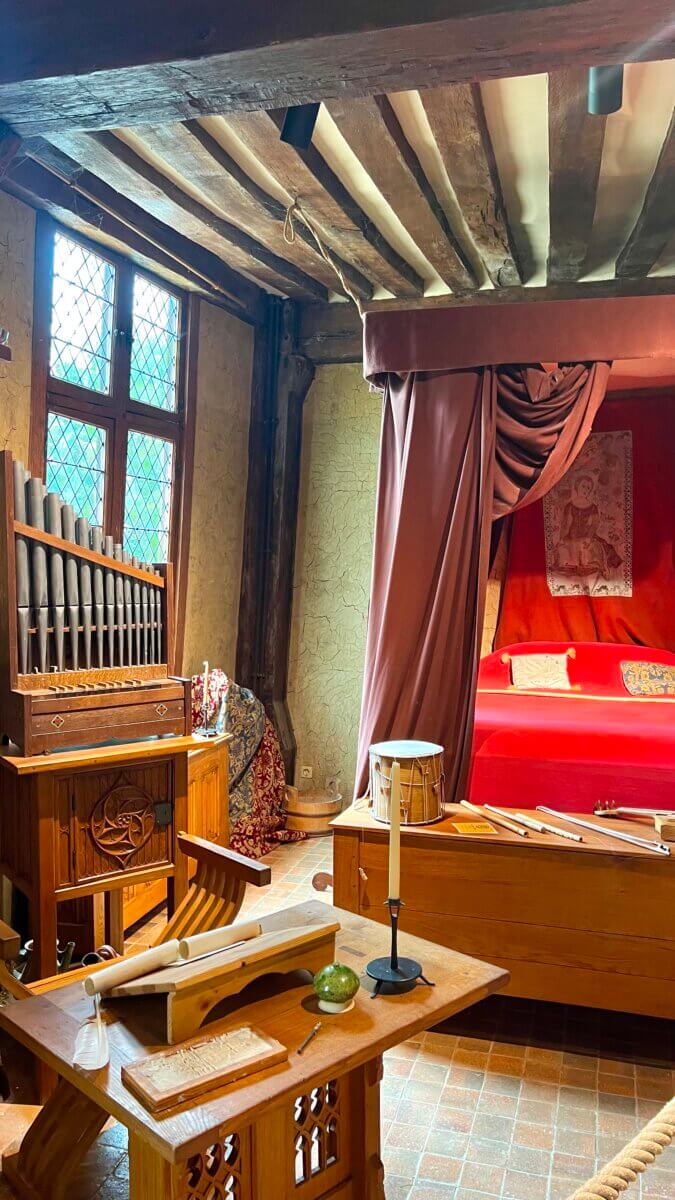
Over the second moat is the castle. Here, you can hang out outside and practice archery, which was really fun. Inside is where the king and queen lived. Downstairs, you can play a game of chess, and upstairs is the bedroom, along with a dining space showing the kinds of foods a royal family would enjoy, as well as a typical medieval toilet.
If you’re here with little ones, make sure to look out for the dragon observation game. In each area, there’s a little stuffed dragon hidden somewhere, and it’s the kids’ job to find them. It’s a great way to keep them entertained throughout the whole experience.
We had so much fun here, we just wished we had come on a day with a bit more of a vibe. We highly recommend visiting during the summer months, as they host many themed events that they talk about on their website. Fishing lessons in the castle’s moat, medieval entertainment, reenactments, knight tournaments, and more.
However, it was still super interesting and interactive, and we learned so much. In a way, it was also nice to have the place to ourselves. This place is great for all ages, but if you have kids, definitely don’t miss it.
Entry is 12 euros, children from 5 to 18 are 6€, and children under 5 are free. There is also a family pass for 2 adults and 3 children for 35€. Rates may vary if there is a special event.
PART 3: Normandy’s Cider Route “Route du Cidre”
The Normandy Cider Route, known as the Route du Cidre, is a scenic driving route through the Pays d’Auge region where you stop at local farms and producers to taste cider, calvados (apple brandy), and pommeau (an apple aperitif). It’s popular because Normandy is one of France’s biggest apple-growing regions, and this area is known for producing some of the country’s best cider.
Normandy or Pays d’Auge?
If you’re wondering why sometimes you see Pays d’Auge instead of Normandie, it’s because Pays d’Auge is a smaller region inside Normandy. Known for apples, cider, calvados, Camembert cheese, and pretty countryside villages. You’ll often see “Pays d’Auge” used when people want to highlight that specific local area rather than Normandy as a whole.
One of the most memorable experiences of this trip was visiting a family-run apple farm and distillery called Pierre Huet.
We chose this one because it had really good reviews online and, based on the photos, it looked beautiful. And it was. With a big Normandy-style house in the middle and orchards in the background. They grow more than 25 types of apples across 30 hectares of orchards.
As soon as you walk into the main reception area where the distillery is, it smells like cider.
Tour of the cider farm
The tour is available in French or English and includes a guided visit around the farm, the cider house, and the distillery, plus a tasting of the different drinks they produce on-site. You can also skip the tour and just do the tasting, but we highly recommend the full tour. It was absolutely worth it. At the end, we’ll tell you how much we paid for the whole experience.
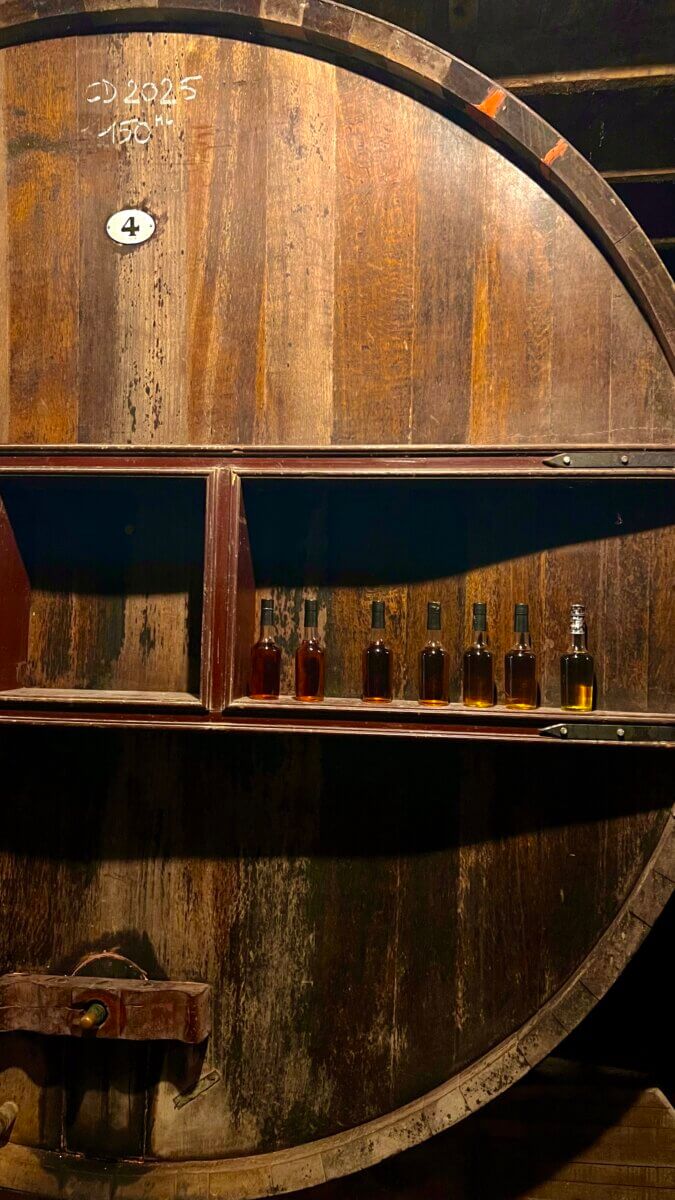
Our guide was extremely kind and knowledgeable, and we learned so much about the different apple types in Normandy, the process of harvesting and sorting the apples, and making the cider, as well as storing the cider, Calvados, and Pommeau in special oak barrels.
One thing we learned about Calvados is that if it isn’t made from Normandy apples, produced in Normandy, and stored in Normandy oak barrels, it cannot be considered Calvados. The whole process must be entirely local.
The tasting…
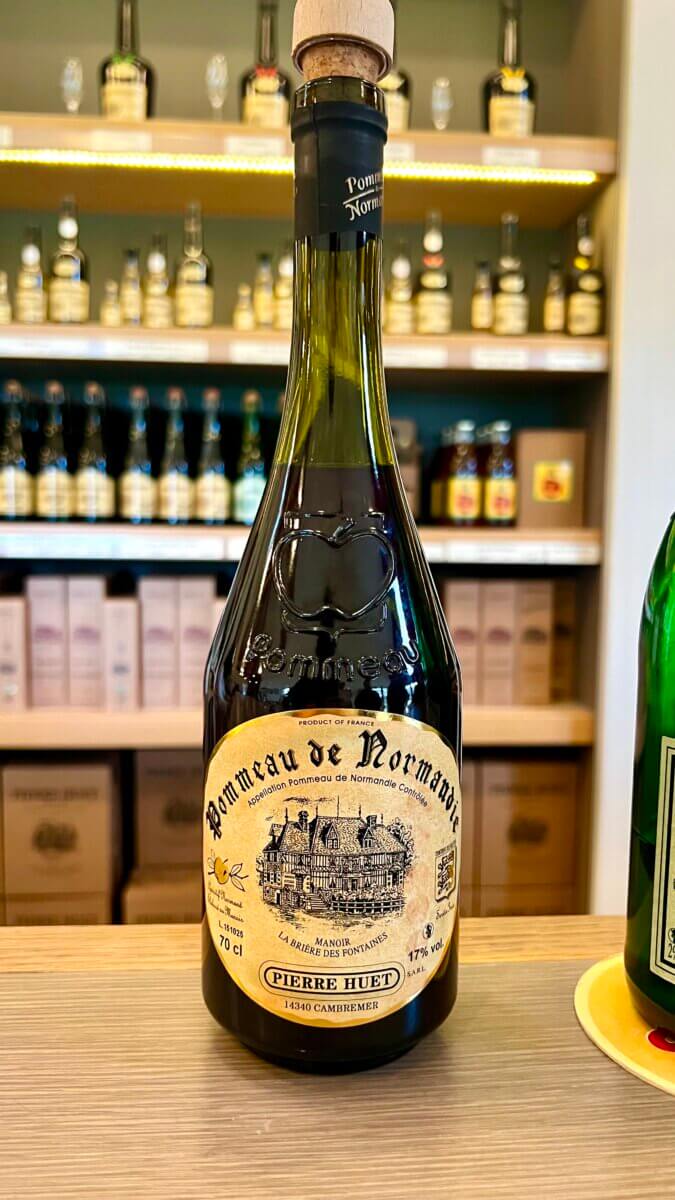
At the end, we got to taste pear cider, which was delicious, along with three types of apple cider (sweet, brut, and semi-dry), different ages of Calvados and Pommeau, and their apple juice for the teenager. Our favourites were actually the pear cider funny enough, the Pommeau, and the apple juice. The Calvados was a bit too strong for us, as it’s 40% alcohol.
The guide told us that people in Normandy drink it at events to make space for more food because it’s so strong that it “makes a hole in your stomach.” She was also kind enough to let us try some of the other Pommeau flavours they make, like cherry, passion fruit, and pineapple, as well as their apple cider vinegar, which was delicious. In the end, we ended up buying some of our favourites to take back home.
The tour with the tasting cost 3,50€ per person which is more than worth it in our opinion.
If you would like to order their products online, they ship to many countries in the world. On their website you can find the exact countries and contact info to place an order.
Again, one of the downsides of visiting in early April was that the trees weren’t in bloom yet and it wasn’t harvesting season. On the plus side, it was low season, so we had our tour guide all to ourselves and were able to ask as many questions as we wanted.
In Summary: Was it worth it?
We absolutely love Normandy. The first time we went we ticked off the bucket list places like Etretat and the D-Day beaches and knew we wanted to return to this region of France as we realised there was so much more we didn’t get time to see. And this part of Normandy did not disappoint. We absolutely loved every single place that we visited. However, our favourite has to be the tour of the distillery and tasting. We highly suggest not skipping this area.
Related Reads You’ll Love…
If you’re thinking about doing a road trip in Normandy, we have a full blog post. We share our favourite destinations you cannot miss (Étretat, Honfleur, Mont Saint Michel, Avranches…), our top tips, and how you can avoid the same mistakes we did.
If you’re looking for more ideas on where to go in France, make sure to check out our blog post “8Top French HolidayDestinations” for some seriously beautiful spots. Or, if you’re more of a road trip type of traveler, check out our post TOP 7 EPIC FRENCHROAD TRIPS you can do in under 10 days. And if the south of France is on your list, don’t miss our full French RivieraRoadTrip, packed with dreamy stops and practical tips. Traveling on a budget? We’ve got you covered. Head over to our Top Budget TravelHacks to learn how to plan the trip of your dreams without spending a fortune.
Want more insider road trip hacks and get to see behind-the-scenes of our travels?
If you’re not already on the list, sign up to our weekly newsletter to stay updated, plus we share super useful travel tips!
Leave a Reply