Today we’re visiting one of the most famous gardens in the world: Claude Monet’s Garden and House in Giverny France. This place inspired many of Monet’s paintings, but today we’re showing you what it actually looks like in real life.
We’ll show you exactly how to get here, the best time to visit to see all the blooms, what there is to see inside the gardens and house, how much it costs, tips for avoiding crowds, and whether this day trip is actually worth adding to your itinerary.
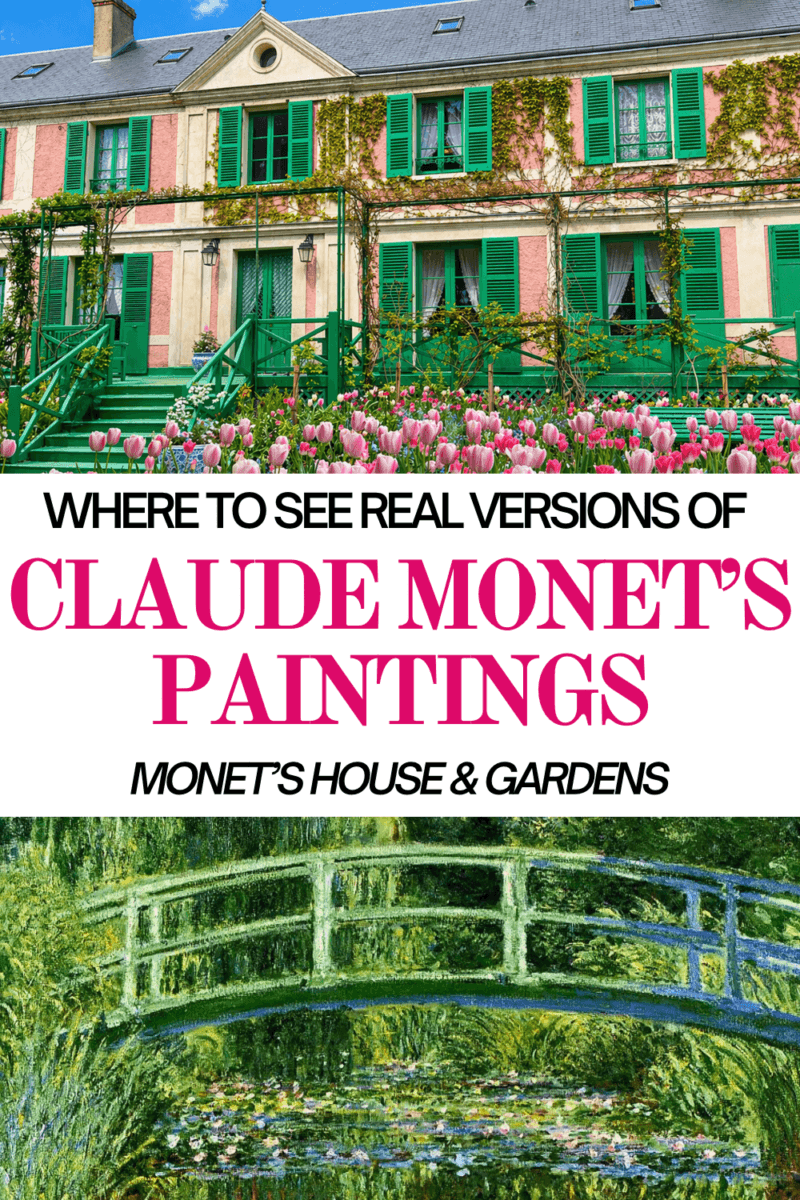
Who Was Claude Monet & Why Is This Place Famous
Before visiting the gardens, it helps to know why this place matters. Claude Monet was one of the founders of Impressionism. An art movement focused on capturing light, colour and everyday moments, which is why they started painting outdoors rather than in a studio. He moved to Giverny in 1883 and lived here for over 40 years. He curated each space to turn his surroundings into real-life sources of inspiration.
How to Get There (easy day trip from Paris or Versailles)
Giverny is an easy day trip from Paris or Versailles.
Getting to Giverny from both Paris and Versailles is pretty easy, and you have a few options depending on your budget and how much flexibility you want.
From Paris by train…
This is one of the easiest and cheapest ways to do it yourself. Take a train from Gare Saint-Lazare to Vernon-Giverny station which takes around 45 minutes. Once you arrive, Giverny is about a 10-minute shuttle bus ride away, or you can take a taxi, rent a bike, or walk if you want to save money.
Check train schedules before booking tickets because rail work can sometimes affect routes from Paris.
Guided tour…
If you want everything planned for you, there are plenty of guided tours that leave from Paris and include your bus transport, entry tickets and a guide. Some tours only visit Giverny, and others combine Giverny and Palace of Versailles in one day.
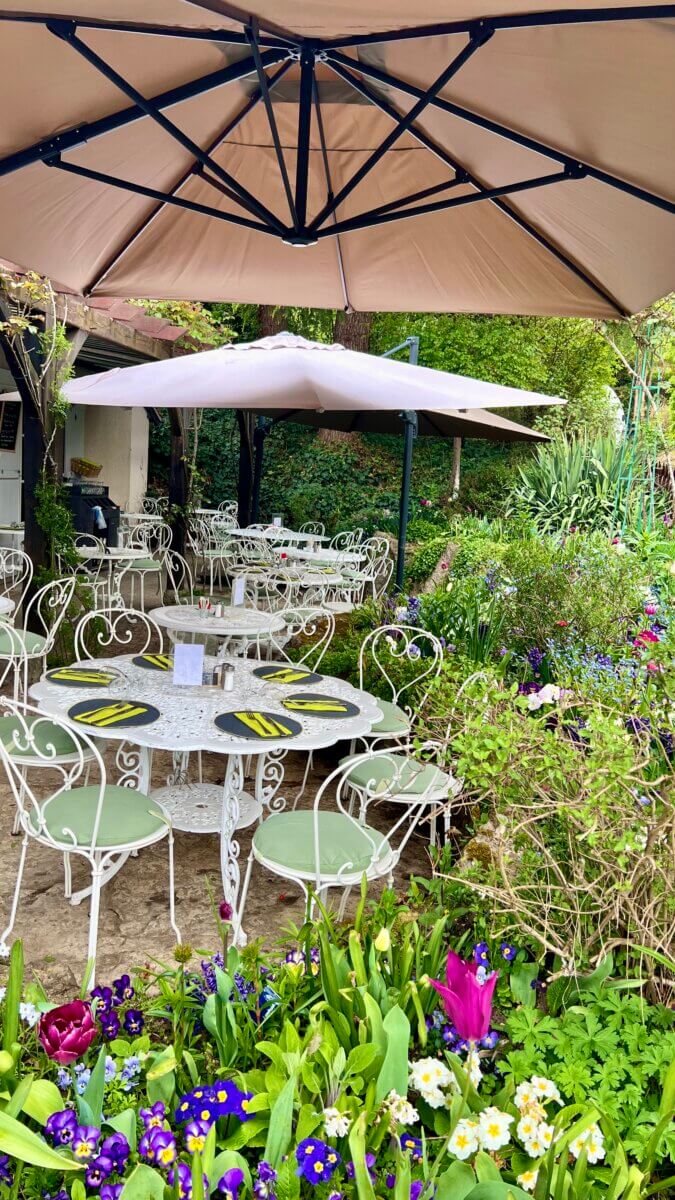
Parking in Giverny…
If you don’t go for a guided tour and prefer more flexibility, we recommend going by car, the drive is about 1 hour from Versailles or 1h and 40 mins from Paris. There’s free parking nearby, which makes driving even easier.
Don’t have your own car? Rent a car here.
If you want the cheapest option, take the train. If you want the easiest option, book a tour or drive there yourself.
Walk around the village after or before your visit. Giverny is tiny but really pretty, and there are a few souvenir shops with Monet inspired gifts, cafés, like Nymphéas, where we had some viennoise hot chocolate, the Museum of Impressionism and cute streets that most people skip once they leave. Keep in mind, for the most part a lot of the restaurants and cafés are touristy, but are great for a quick bite or a coffee.
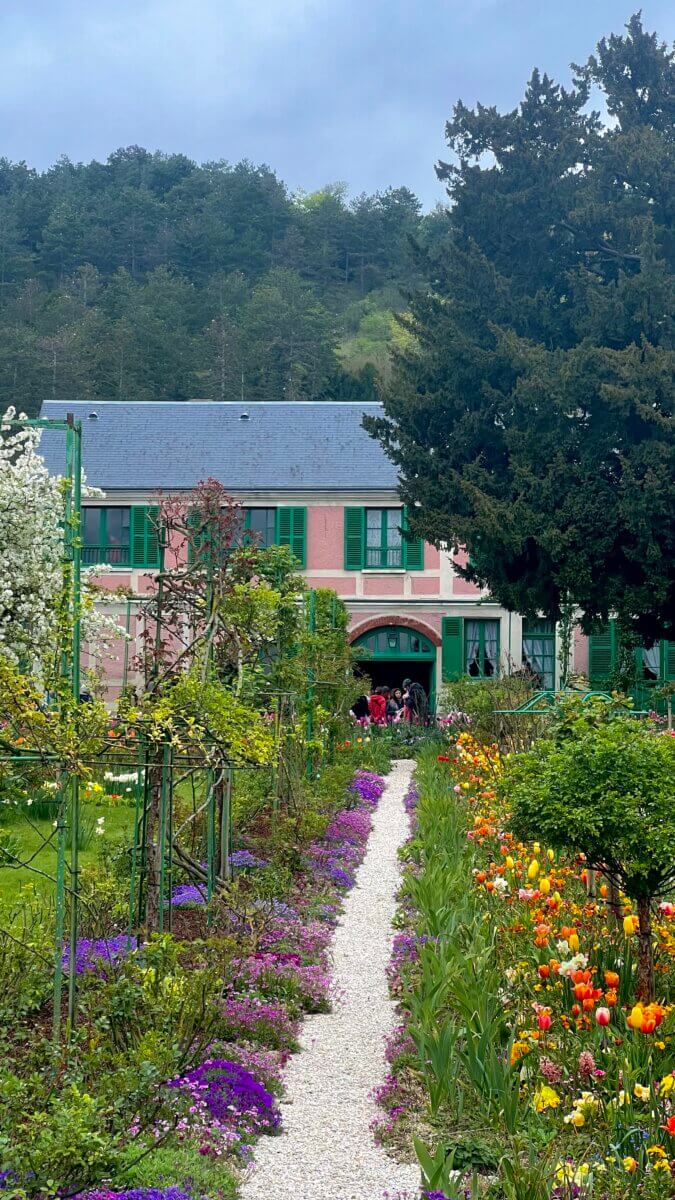
Visiting the gardens
The gardens at Monet’s house are split into two main areas.
First is the Clos Normand, which is the large flower garden right in front of his house. This is where you’ll see the famous pathways lined with flower beds and metal arches covered in roses and vines. One of the coolest details here is that the flower beds are arranged by colour, almost like a rainbow, softer reds to pinks into oranges, purples and blues depending on the season.
The flowers change throughout the year, but in spring and early summer you can expect things like tulips, irises, peonies, roses, poppies and daisies. Later in summer, you’ll see more dahlias, sunflowers, the water lilies and other seasonal flowers.
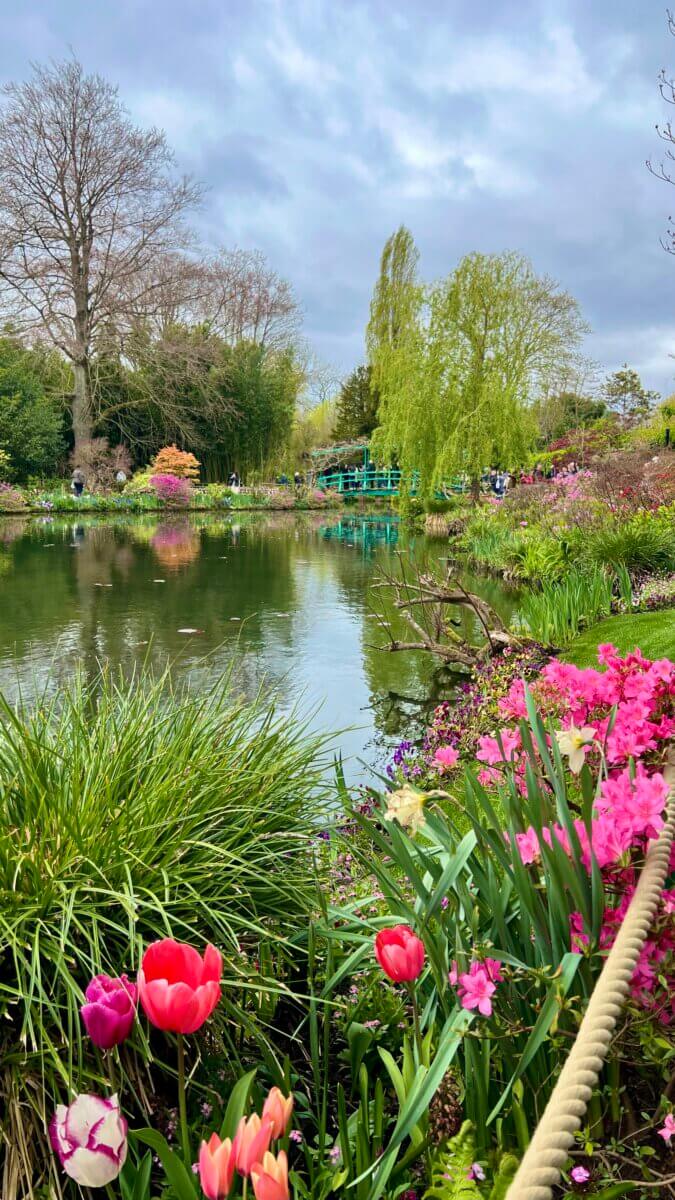
Then you’ll walk through an underpass to reach the Water Garden, which is probably the most famous part of the property. This is where you’ll find the Japanese bridge covered in wisteria, the lily pond and the water lilies that inspired some of Monet’s most famous paintings. There are also willow trees, bamboo and other plants.
Best Time to Visit
April to early June is usually the best overall time to go. This is when you’ll see a lot of the flower beds looking their best and wisteria over the Japanese bridge in full bloom, especially early May since it only lasts for about 2 weeks. We went in early April and as you can see we didn’t get to experience it in full bloom.
Late June to August is best if seeing Monet’s famous water lilies is your priority. This is when they’re usually in bloom, but it’s also the busiest time of year, so expect bigger crowds.
September to October can also be a great option if you want fewer people and cooler weather. The gardens are still beautiful, but you may miss some of the peak blooms.
As for time of day, go right at opening at 10am or later in the afternoon if you want fewer crowds and better photos. Midday is usually the busiest with tour groups.
And if you can, avoid weekends and public holidays because this place gets very busy. A weekday morning is usually your best bet.
The Story of Monet’s house
In 1883, Monet discovered Giverny while looking out of a train window and decided to move there. He first rented the house, then bought it in 1890 once he had more financial success.
He lived there with his second wife Alice Hoschedé, their combined children from previous marriages, and household staff. It was a very full house.
He lived here until he died in 1926.
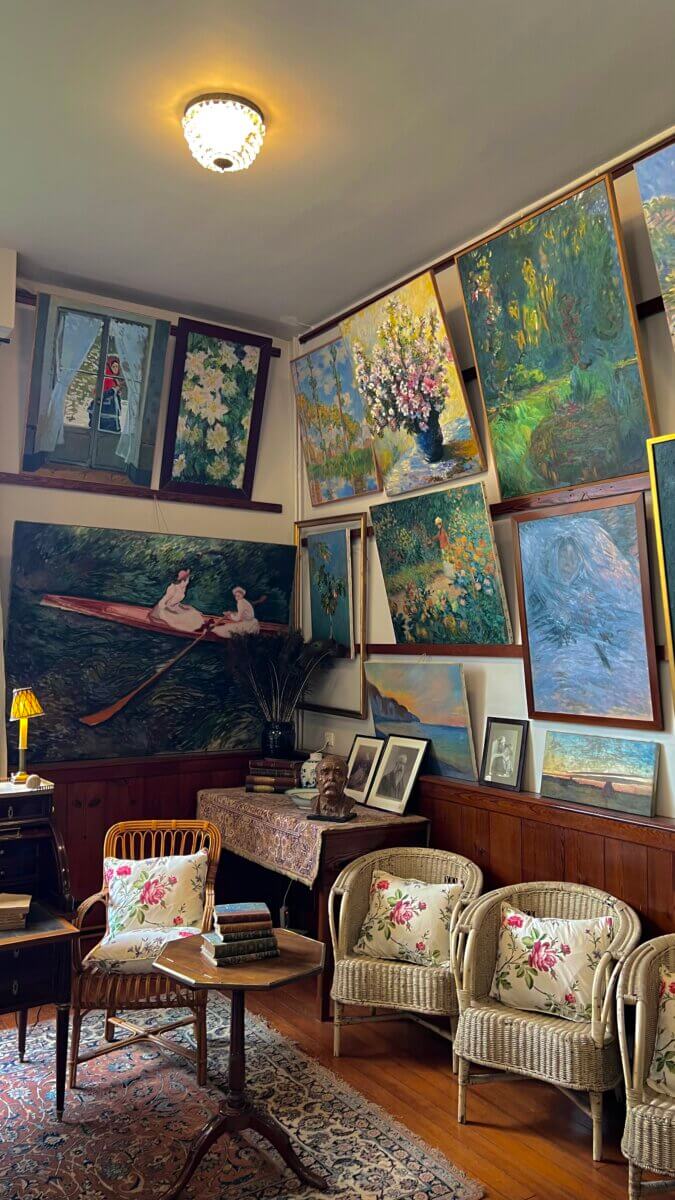
Inside the House
You’ll enter through the ground floor, where you first walk through Monet’s small reading room and living spaces. The house feels surprisingly personal and lived-in rather than overly formal. It has this bright countryside charm with colourful walls, floral details and large windows looking out onto the gardens.
As you continue upstairs, you’ll find Monet’s bedroom, along with other private family bedrooms and smaller living spaces. These rooms feel more simple and intimate and give you a better idea of what everyday life looked like inside the home.
From there, you’ll move into the yellow dining room, which is probably one of the most memorable rooms in the house. The walls are painted this bold bright yellow with matching furniture, reflecting Monet’s love of colour.
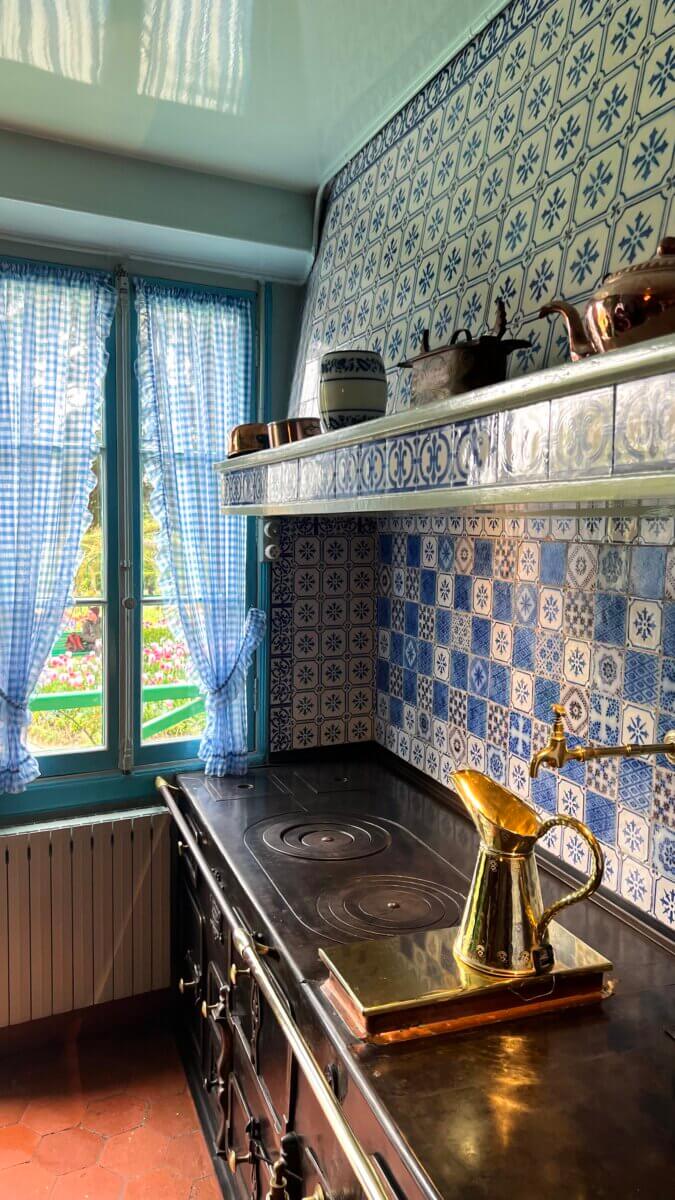
Next is the blue kitchen, probably one of our favourites. It’s covered in beautiful blue Rouen tiles and filled with copper cookware hanging on the walls. It’s incredibly beautiful, and it’s one of the most photographed rooms in the house.
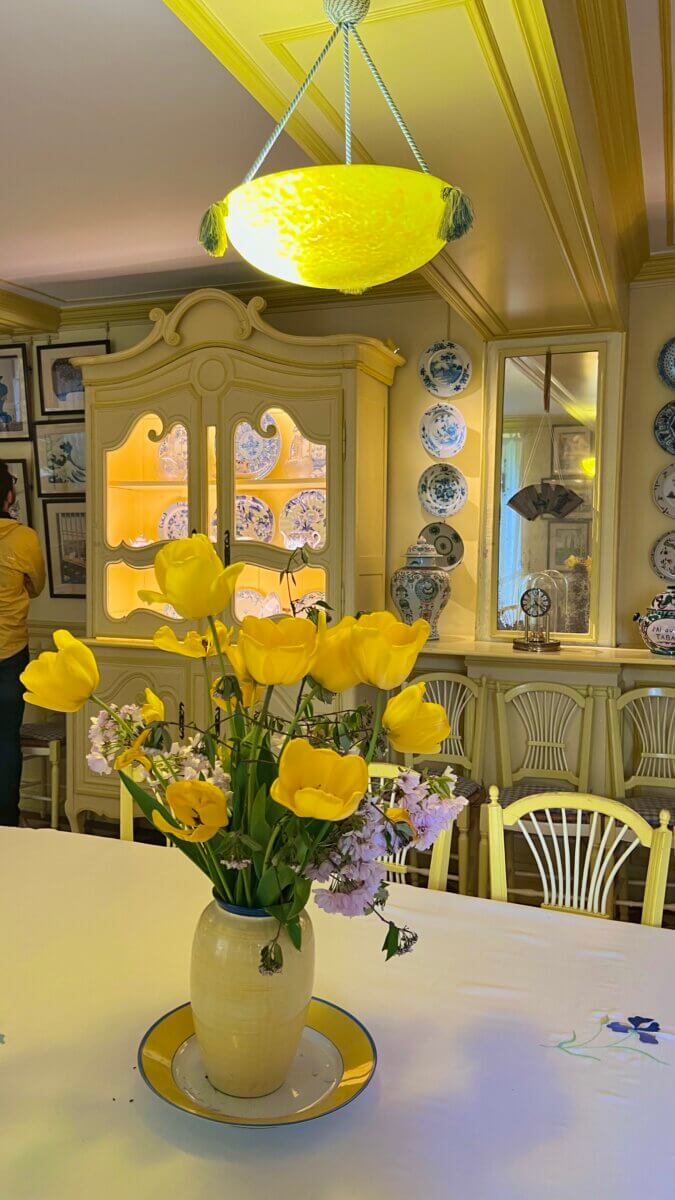
Throughout the house, you’ll notice a huge collection of Japanese prints and Asian-inspired artwork on the walls. Monet was deeply inspired by Japanese art, which also influenced the design of his famous water garden, including the Japanese bridge.
Don’t rush through the house. A lot of people focus only on the gardens, but Monet’s colorful kitchen, dining room and studio are really worth seeing too.
If you’re wondering where Monet painted all of his famous paintings, at the end of your visit you will go into the gift shop which actually used to be the big studio he had built for large canvases, and is the exact spot where he painted the famous Water Lilies.
Ticket Prices
Tickets give you access to both Fondation Claude Monet and the gardens. For 2026, standard adult tickets are €13, children ages 7–17 are €7, students are €7, children under 7 are free, and visitors with disabilities are €6.
You can also buy tickets online in advance for a small booking fee, which I highly recommend during peak season because lines can get very long. Especially in spring and summer. People have reported waiting up to two hours without pre-booked tickets.
The gardens are open daily from April 1st to November 1st from 10am to 6pm, with last entry at 5:30pm.
Is It Worth It?
Even though we didn’t get to see it in full bloom, yes, it is absolutely worth it. The gardens are so well looked after and tended to, every corner is something more beautiful than the last and the house is like something out of an old children’s story book. It’s the perfect Spring/Summer day trip you cannot miss if you are close by like staying in Paris or Versailles.
Where to stay in Giverny (or nearby)…
Budget-friendly stays…
- ibis Velizy Jouy-En-Josas – Versailles
- Le Jardin des Merveilles – close to Giverny
Medium budget stays…
- Caulaincourt Montmartre by Hiphophostels – Paris
- La Bonne Etoile – near Giverny
Luxury stays…
- Le Moulin des Chennevières l Giverny – Giverny
- Le Louis Hotel Versailles Château – MGallery Collection – Versailles
- Hôtel Eldorado Paris – Paris
Related Read You’ll Love…
If you’re thinking about adding the Palace of Versailles to your trip, we have a full blog post. We share our experience, our top tips, and how you can avoid the same mistakes we did. If we went again, this is exactly how we’d do it.
If you’re looking for more ideas on where to go in France, make sure to check out our blog post “8Top French HolidayDestinations” for some seriously beautiful spots. Or, if you’re more of a road trip type of traveler, check out our post TOP 7 EPIC FRENCHROAD TRIPS you can do in under 10 days. And if the south of France is on your list, don’t miss our full French RivieraRoadTrip, packed with dreamy stops and practical tips. Traveling on a budget? We’ve got you covered. Head over to our Top Budget TravelHacks to learn how to plan the trip of your dreams without spending a fortune.
Want more insider road trip hacks and get to see behind-the-scenes of our travels?
If you’re not already on the list, sign up to our weekly newsletter to stay updated, plus we share super useful travel tips!
Leave a Reply