If you’re dreaming of a road trip through Normandy, France (one filled with stunning views, charming towns, peaceful countryside, and amazing food), but still want to keep it budget-friendly, this region is exactly what you’re looking for. We just wrapped up our own Normandy road trip, and in this post (and the video below), we’re sharing everything you need to know to plan yours. We’ll start with our top tips for planning a road trip in Normandy and finish with our must-visit destinations, plus what to do, see, and eat in each spot.

How to Plan the Ultimate Normandy France Road Trip
- Intro to Normandy
- Why you should pick traveling by car (over anything else!)
- Our biggest strategy when picking accommodation
- Must-see places in Normandy
Normandy France
Normandy is located in the northwest of France, along the English Channel. It’s known for some amazing food, like apple cider, mussels and fries, Camembert cheese, and Vire sausages.
It’s also full of history. This region played a major role in World War II, and the D-Day beaches are still one of the most powerful places to visit in France (which we’ll get into later).
Here’s why you should pick traveling by car (over anything else)
As a family of four living in Europe, we love road trips. Compared to other types of travel, it’s often more affordable, and it gives you the flexibility to stop wherever you want (including places you’d probably miss by train or plane). That’s where the real hidden gems are.
That said, road trips do require some planning. Make sure to budget for fuel, tolls, and parking. In France, tolls can add up, so we use the Waze app because it estimates toll costs in advance. You can avoid tolls completely, but keep in mind, the no-toll routes usually take a lot longer, which can be tricky if you’re short on time or traveling with kids.
Rent a car
If you’re not bringing your own car, we recommend renting one!
Getrentacar is a super easy-to-use car rental app that helps you compare prices and book rental cars across Europe. It offers a wide selection of cars from top rental agencies, letting you filter by price, car type, and pick-up location.
With instant booking, secure payment options, and the ability to modify or cancel reservations, they also offers special deals, real-time availability updates, and a user-friendly interface. We highly recommend using them if you’re planning on taking a road trip.
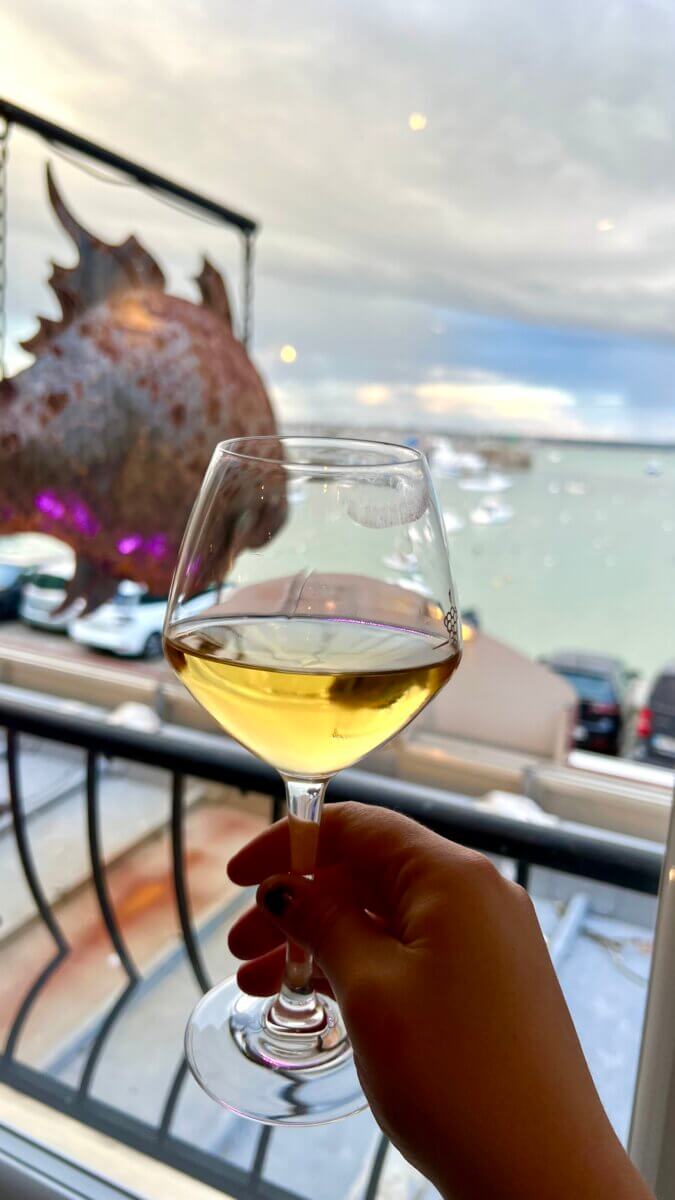
Ok now, this is our biggest strategy when picking accommodation
Map out the places you want to visit, draw a rough circle, and find a place to stay in the center of that area. This way your daily drives are more balanced (ideally no more than 1 to 2 hours each way) and you won’t waste time packing up and moving hotels every night.
Unless you’re in a camper van, staying in one base really simplifies things. And if you want tips on finding beautiful places to stay without settling on cheap hostels but without blowing your budget, check out our post linked here.
Before you continue reading… Consider signing up to our weekly newsletter to stay updated on future travel content in Europe, plus we share super useful travel tips!
Our must-visit places in Normandy and what you should see, do and eat in each one!
- Étretat
- Le Havre
- Driving in Normandy
- Honfleur
- Mont Saint-Michel
- Avranches
- Vains
- Granville
- D-day beaches (Omaha)
Étretat
Étretat is a stunning town on the coast of Normandy. What makes Étretat special are its dramatic cliffs and rock formations, especially the Port d’Aval arch and L’Aiguille (that sharp needle-shaped one rising out of the sea).
The best views are either from: the beach, the water is so clear and blue. We went in April and it was a perfect day and there were definitely people, but it wasn’t too crowded.
Another great place to see the view is from the top, near the Chapelle Notre-Dame-de-la-Garde (you can walk or hop on the little tourist train), or from the Jardins d’Étretat right next to it.
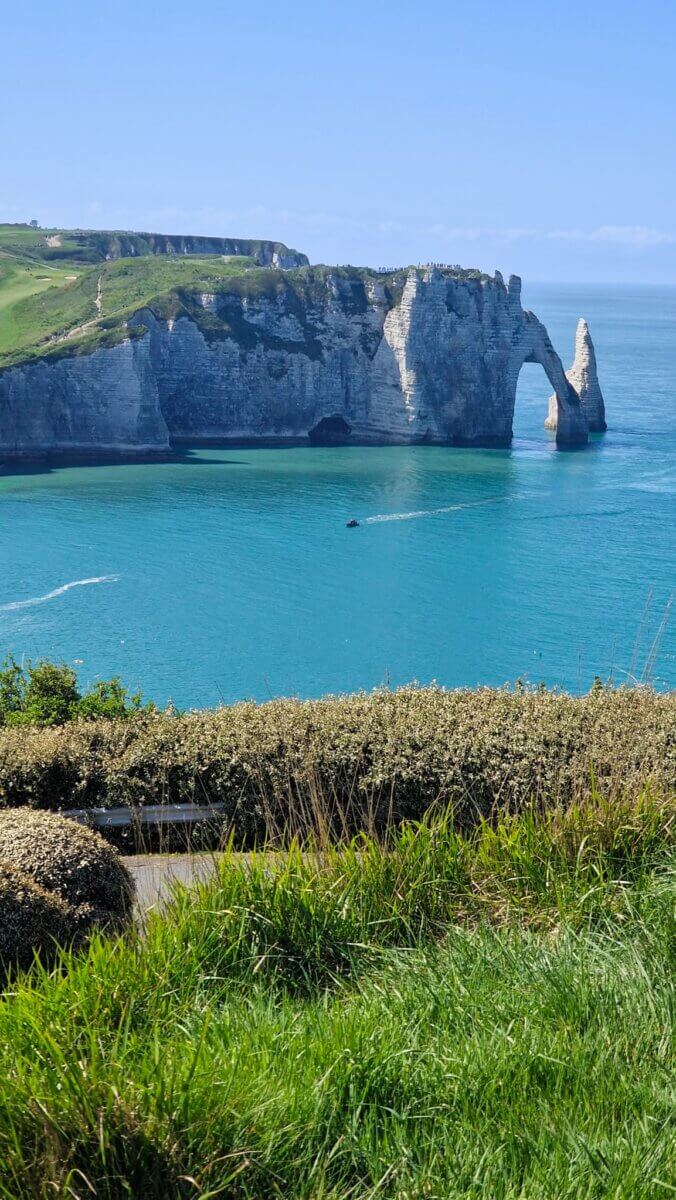
Jardins d’Étretat
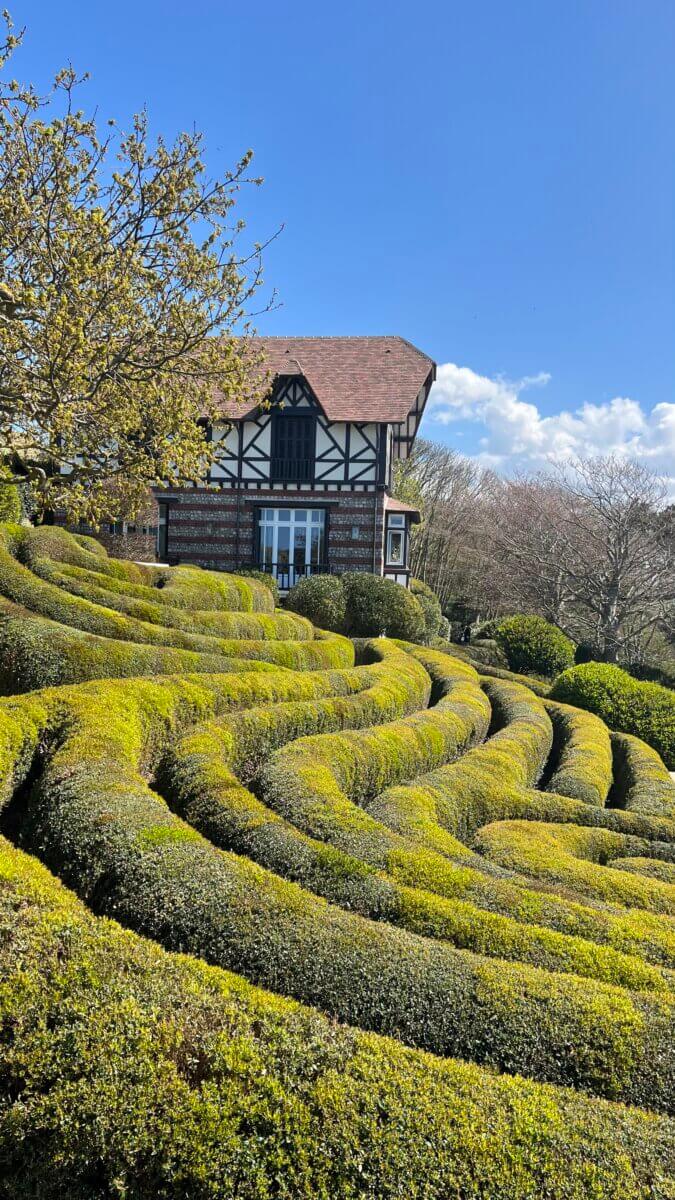
The garden is really lovely and worth checking out, though we did think the price was a bit steep (€12.90) for what it was, just keep that in mind. Still, we’re glad we went!
It’s supposed to be inspired by Monet’s paintings and we could definitely see that in some areas. The main thing most people go there for is to see the giant head-shaped sculptures, each with a unique expression, surrounded by bushes that look like flower petals. I found them quite interesting and fun to look at.
Overall it’s a beautiful, well looked after garden with plenty to explore with a gift shop in a beautiful house with views of the cliffs and a cute little café at the bottom. Our favourite part was the view from the lookout, the maze-like spiral bushes and the zen garden.
What to eat in Étretat
For lunch, we had the most amazing moules frites covered in Camembert cheese at a spot called La Courtine. The service was great, and their mussels are imported from different parts of France, so they serve them year-round. We sat outside since it was such a beautiful day and although we didn’t have views of the cliffs, the surrounding buildings were lovely. A big tip when eating meals in touristy places is to walk a couple mins away from the main areas. This is the sacrifice you have to make if you want much better quality food for better prices.
Le Havre
When driving from Honfleur to Étretat, you’ll most likely cross the Pont de Normandie. This long bridge is significant because it’s the last bridge over the Seine River, located right at the river’s mouth. It connects Honfleur to Le Havre, the major port city at the mouth of the Seine, which is said to be the first city in Normandy.
Driving in Normandy
One of our favourite things about driving in Normandy is all the fields of yellow flowers. We kept asking ourselves what they were until we actually decided to Google it. It turns out they’re canola flowers that bloom in the spring, usually from April to May, and are used to make canola oil. In French, it’s called colza and is extremely common in many supermarket products and used for cooking. Because unlike in America, it’s not genetically engineered or heavily refined, and is actually good for you!
Speaking of driving, if you’d like to learn some tips about driving in France, check out this post where we go over road rules specific to France and share advice to help you avoid fines and other issues.
Honfleur
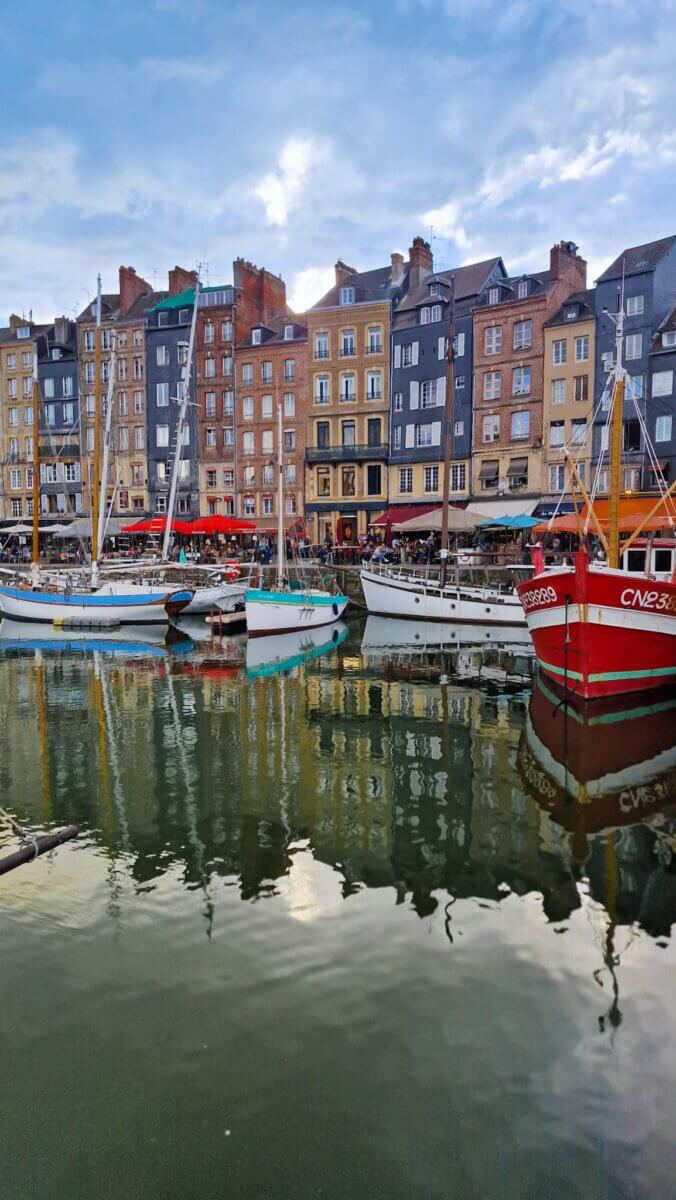
This charming port town sits right on the Normandy coast. The port blew us away with all the boats surrounded by colorful buildings and restaurants.
What to eat in Honfleur
While you’re there, don’t miss the galettes (savoury buckwheat crêpes) at a cute spot called J’en crêpe d’envie. Galettes are originally from Brittany, but since Normandy is right next door, you’ll find them here too. We tried one with typical toppings from Normandy: apple, Vire sausage, and creamy camembert. So good!
Mont Saint-Michel
Mont Saint-Michel is a stunning island commune, a medieval abbey that seems to float above the sea. You have to park at the Mont-Saint-Michel parking lot where you can take the free shuttle bus “Le Passeur” to the island, but we suggest walking the 2.5km, it’s a much better experience and you see much more.
You definitely should go all the way up to see the abbey and stop by the different viewpoints. One of our favourites was from here, where we could see a group of people walking on the sand as the water started to rise.
If want more information about Mont Saint-Michel like the best time to visit, where to park, pricing, what to do and see there… check out this blog post here!
What to eat (or not to eat!) in Mont Saint-Michel
Pro tip: don’t eat at any of the restaurants on the island, they are total tourist traps and have terrible reviews! Instead, next to the parking lot, there are lots of french restaurants by the river. We went to Le Pré Salé and absolutely loved their creamy moules frites (mussels and fries), which is typical in Normandy and a must try. While you’re here, stop by the Barrage du Mont Saint Michel for breathtaking views, we suggest timing it to see the sunset over the island.
Avranches
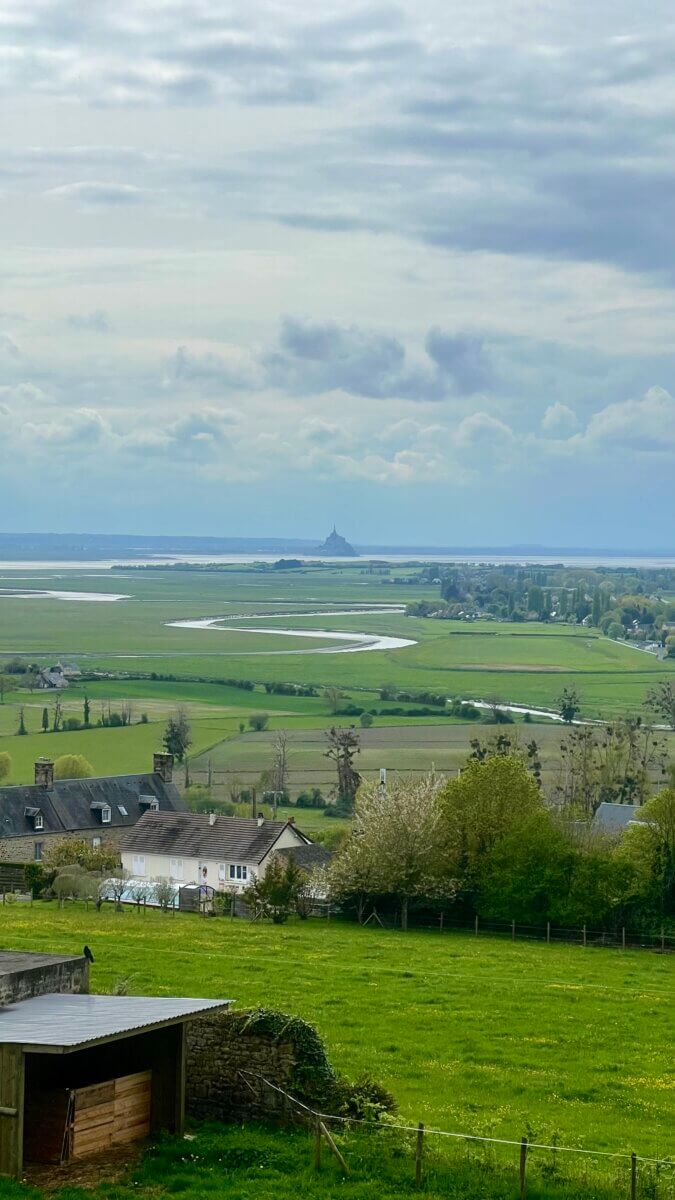
Close to Mont-Saint-Michel, Avranches is one of my personal favourite towns. We highly suggest just getting lost in all the little streets and seeing their charming houses.
Avranches is known for the Église Notre-Dame-des-Champs and the Jardin des Plantes, a magical public garden with views of Mont-Saint-Michel in the distance. It’s seriously beautiful.
Fun fact: the Scriptorial Museum here keeps ancient manuscripts from Mont-Saint-Michel, including a Bible from the 9th century. If you love history, definitely pay it a visit.
What to eat in Avranches
As for what we ate. Right next to the church, there’s a patisserie called Éclat de Fèves—and we’re not even kidding, we had the best caramel éclair of our lives there. The caramel flan was also amazing, and we gave their Brioche Normande a try too (since brioche is originally from Normandy), but honestly, the éclair and flan stole the show.
Vains
Vains is a little town close to Avranches that we stopped by for dinner one night at a crêperie we found after hours of searching on Google Maps while driving.
We had driven past the town, which looked very cute, but the restaurant itself was so charming, and the staff were super friendly and welcoming.
They sat us at a table by the fireplace, which made the whole vibe feel very cozy. We each had a galette for our main meal, and they were delicious. For dessert, we had sweet crêpes. The most memorable one was the Black Forest crêpe I ordered, one of the best we’ve ever tasted.
We highly recommend booking a table here and stopping by.

Granville
Being a seaside town, Granville is known for its seafood. There’s this spot right by the port called Restaurant du Port, and we loved it so much we actually went back a year later on our recent trip just to eat there again. Their creamy moules frites (that’s mussels with fries) were amazing—when they’re in season, of course.
The second time we went, they didn’t have any mussels available, which totally surprised us. We ended up trying other seafood dishes on the menu (not what we were craving, but still good and fresh).
It’s just about an hour’s drive from Mont-Saint-Michel, so it’s easy to fit into your itinerary.
Take a walk along Le Roc to the Phare du cap Lihou. Built in 1828, it is a beautiful spot to watch the sea with the sunset in the background.
D-Day Beaches (Omaha Beach)
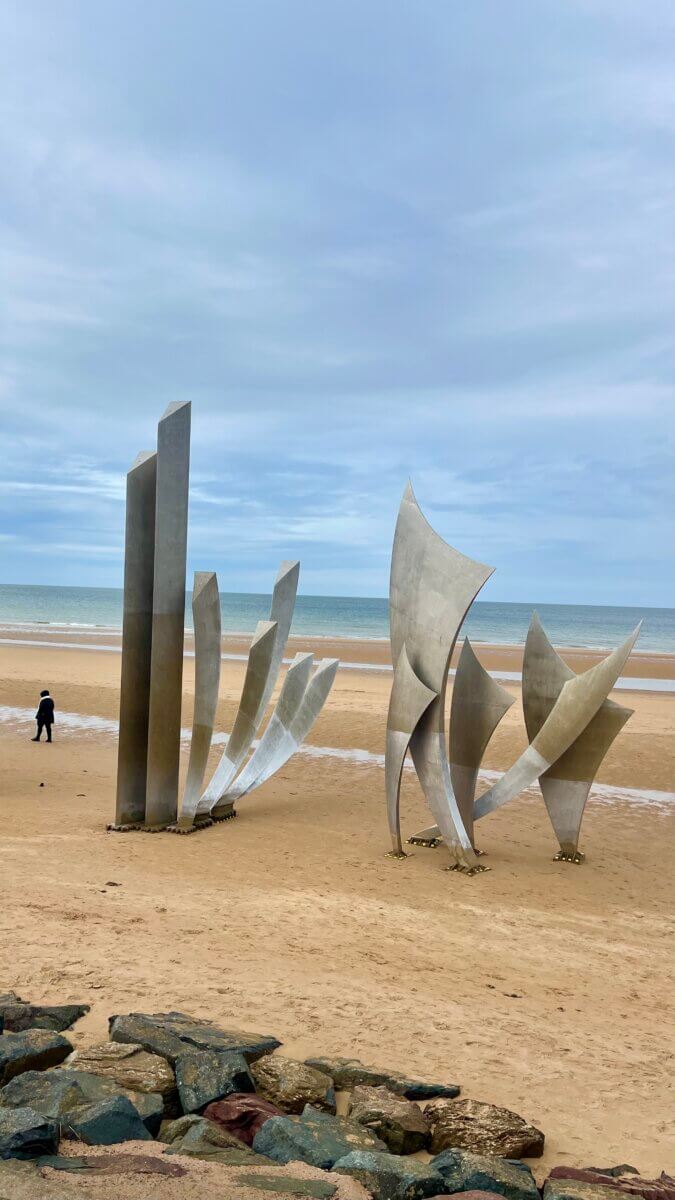
If you’re planning to visit the D-Day beaches, here’s one important tip: come early. We went to Omaha Beach later in the day and found that all the museums and cemeteries were already closed — totally our mistake for not checking the times, so don’t make the same one.
Even so, Omaha Beach was still incredibly moving. There’s a striking monument right on the sand called Les Braves, a tribute to the Allied forces that landed here. Along the beach you’ll also find info boards that walk you through the events of June 6th, 1944.
Further along the shore, there’s a memorial bunker with a strategically places cannon gun still preserved. A reminder of how close the battle was to the waterline. Just up the hill is the Normandy American Cemetery in Colleville-sur-Mer. It holds the graves of 9,389 soldiers who lost their lives during the D-Day landings.
The cemetery is open every day from 9 a.m. to 5 p.m., except on December 25 and January 1. Just make sure to arrive at least 30 minutes before closing.
More French Getaways, Road Trip Inspo & Budget Hacks You’ll Love
If you’re looking for more ideas on where to go in France, make sure to check out our blog post “8 Top French Holiday Destinations” for some seriously beautiful spots. And if the south of France is on your list, don’t miss our full French Riviera Road Trip — it’s packed with dreamy stops and practical tips. Traveling on a budget? We’ve got you covered. Head over to our Top Budget Travel Hacks to learn how to plan the trip of your dreams without spending a fortune.
Leave a Reply